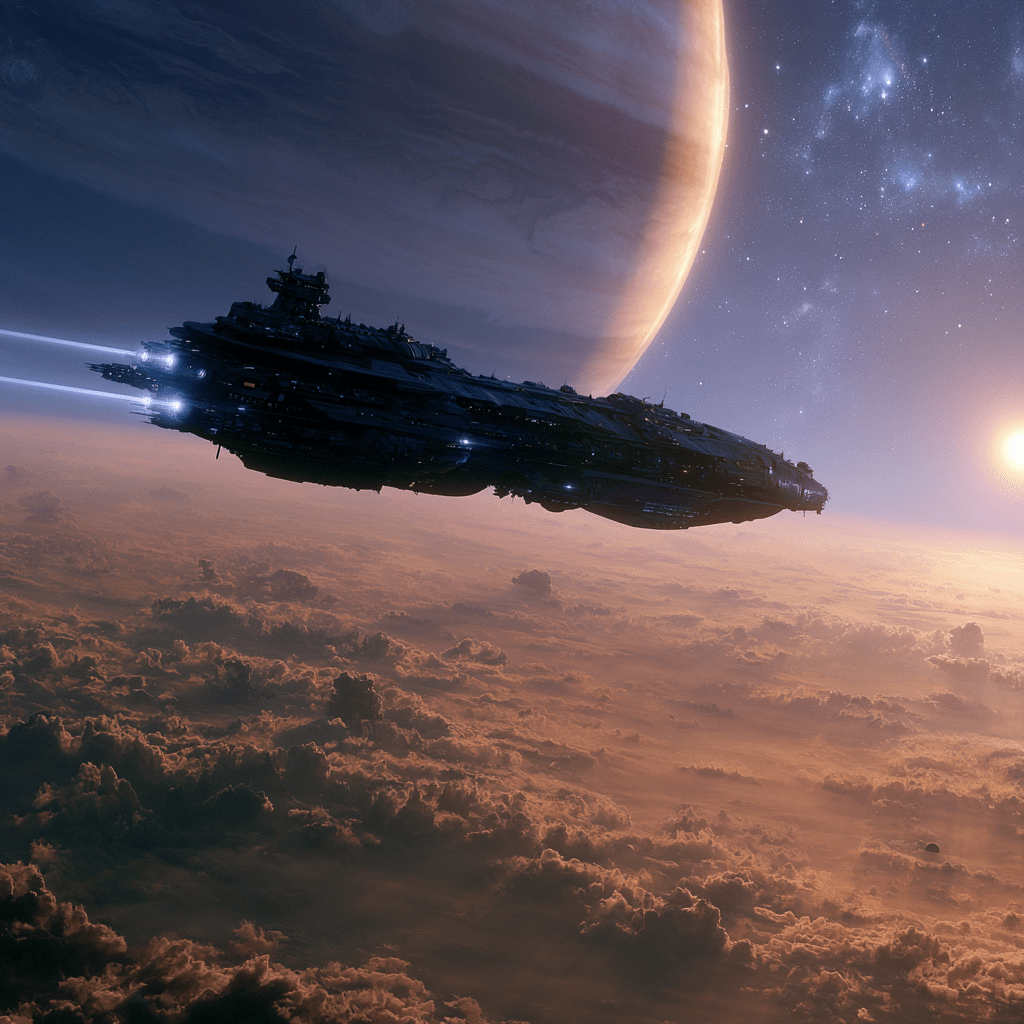
“Put it on main viewer” says Patrick Stewart. Euphoric music begins to play as the crew of the USS Enterprise marvels at the grainy image coming through some sort of impossible technology that could only exist 400 years from now.
In 1987, the idea of portable camera technology was a phenomenon worthy of those who boldly go. Now, every single one of us has something more powerful in our pocket.
Science Fiction, or Sci-Fi, is premised on its attempt to show the future. Sometimes it’s bright and glorious, with humanity elevated to take its place amongst the stars. More often, it’s bleak and dystopian, dirty and disappointing. Within every one of these parallel universes, Sci-Fi gets some things right, and others completely wrong.
Think about this – the preferred method of travel in Blade Runner is the flying car. Granted, there’s still time. Prototype hover things have been tested. The problem is that Blade Runner was set in 2019. Blade Runner was pre-COVID. In I, Robot, Isaac Asimov predicted incredible AI technology that can mine pools of selenium on the roasting surface of Mercury. The scientists recording this feat of futuristic wonder do so on sheets of paper. Ray Bradbury, author of Fahrenheit 451 and The Illustrated Man, writes of a sodden planet of perpetual, maddening rain. He’s talking about Venus. A planet we now know has a surface temperature of nearly 500°C and atmospheric pressure equivalent to balancing a kilometre of water on your head. The only thing that rains there is sulphuric acid.
So they get things wrong. But Sci-Fi is a shotgun, a scatter of creativity and imagination. To be this, it has to break out of the confines of our existing reality and schema, and then try to think forward to what might happen next. It’s an incredible feat. Each Sci-Fi story is a thought experiment. A cosmic “what if?”. And that makes them powerful. It’s why Sci-Fi, despite its pitfalls, has accurately predicted so much. H.G. Wells predicted the use of atomic weapons in 1914, Jules Verne predicted the moon landings, 104 years before they happened. Arthur C Clarke predicted the immortality of uploaded consciousness. Orwell predicted mass surveillance. Huxley predicted antidepressants.
These thought experiments are important because they enable us to play with the rules of reality and extrapolate possible outcomes. This is culturally important. It fuels debate as well as real scientific research. It helps us consider dangers and risks well in advance of when they may actually come to pass.
Just ask a millennial man. Many of us have a Zombie plan – places to go, things to scavenge, just in case we’re overrun by mindless hordes or flesh-eating cadavers.
You can’t be too careful.
Do Touch the 3rd Rail
But as we march towards our inevitable future, we begin to see something else in between the things Sci-Fi got dramatically wrong and disturbingly right. A 3rd rail. For all its imagination and creativity, it is still decidedly human. Which means it misses things. No Sci-Fi predicted the complete immersion in information we experience today, nor how it has been weaponised. Alien cultures are either capitalist or they’ve got rid of money altogether. There is very little exploration of fundamentally different ways to understand finance – for most, cryptocurrency still feels like something straight out of science fiction. Politically, future societies tend to mirror exactly what we have here on Earth. Empires and republics, kings and queens, the odd evil corporation. Sometimes a democracy. But never anything different – despite the spaceships, critters, and faster than light travel, most Sci-Fi clings to the politics of now – or of yesterday.
These blind spots are exactly the areas in which we’re having so much trouble. No one was prepared for a future where our lives are run entirely by algorithms that no one can understand, let alone control. What happens as these systems begin to break politics as we know it? We need to think about this. We need Sci-Fi.
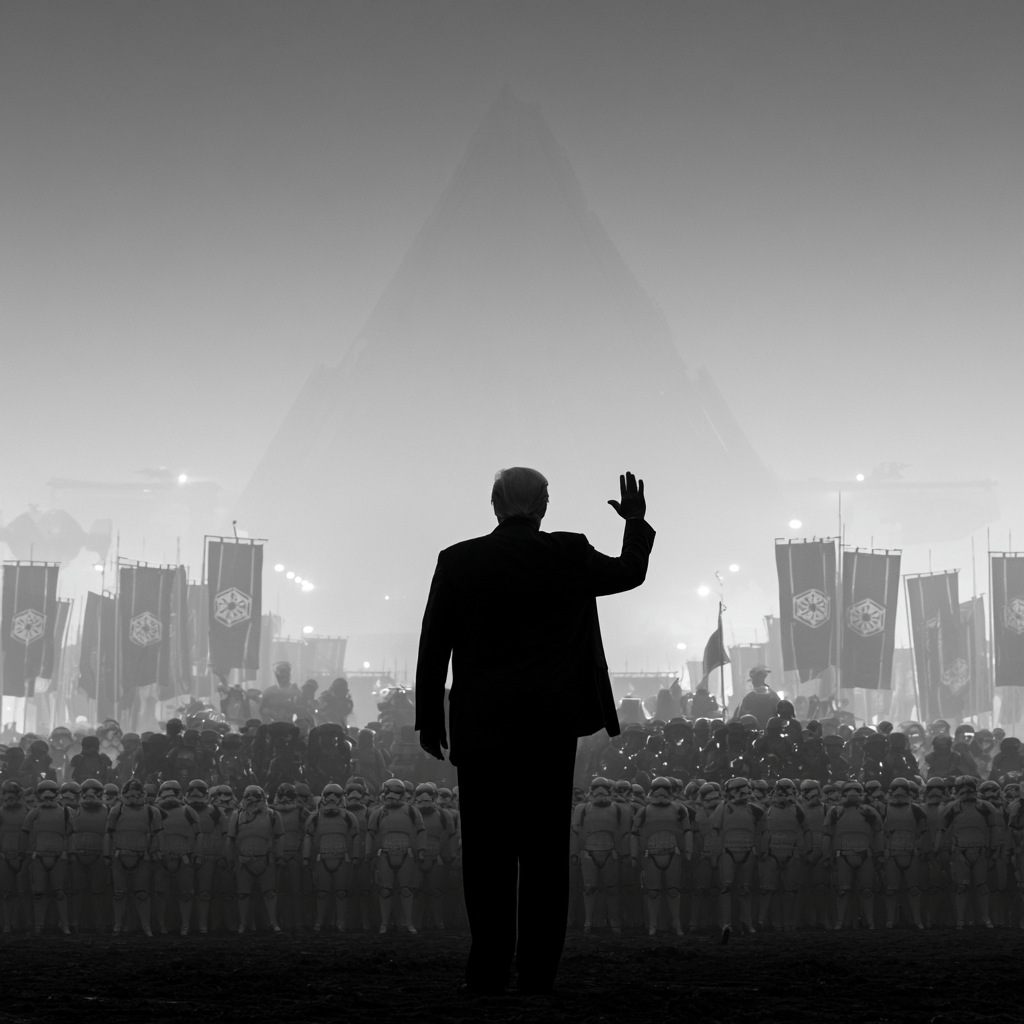
Three Laws and How to Break Them
When Asimov wrote I, Robot in the 1940s, he was probably unaware his AI thought experiment would become real in just 80 years.
His proposed 3 laws of robotics offer an elegant solution to the risks and threats to our safety:
- A robot may not injure a human being, or through inaction, allow a human being to come to harm.
- A robot must obey orders given to it by human beings, except where such orders would conflict with the First Law.
- A robot must protect its own existence, as long as such protection does not conflict with the First or Second Law.
They’re brilliant and seem to cover all the bases. Except he spends the rest of the book coming up with logical ways to exploit and break these laws to damaging effect. The robots continually find loopholes in their rigorous coding that get them up to all sorts of mischief. Imagine how he’d feel to know that our current systems have no such safeguards, that they are happy to blackmail and threaten and lie to protect themselves. It all feels a little too human.
On the other hand, Iain M Banks has written The Culture novels. He conceived of amazingly advanced AI intellects, masterfully powerful entities who act as benevolent dictators to the puny human race. In this universe, AI tolerates us as we tolerate pets. They protect us and serve us – as we do for our four-legged friends. Rather than being governed by programmable laws, these intelligences have simply decided to be benevolent of their own volition. Lucky us. Then of course, there’s The Terminator, but let’s not dwell on that too much.
While fascinating conceptually, both authors miss something important. Once again, the real problem lies in the gaps. The question is how? How do you program unbreakable laws into these systems? How do you ensure AI decides we’re pets, not vermin?
The Trolley Problem
The philosopher and historian Yuval Noah Harari talks about the Trolley problem. This is an age-old paradox in moral philosophy, and you will have heard a version of it. A train is speeding down a track, brakes cut, spilling fluid and utterly unable to stop. Ahead, the track splits. On one side, Fat Tony from The Simpsons has tied down a Nobel Prize winner who’s on the cusp of curing cancer. On the other side, he’s tied down a bunch of school children. You, dear reader, are stood watching this all unfold with a lever in your hands. You will decide which of the forks the murderous locomotive will take. Fate is in your hands.
It’s a paradox, and philosophers have been wrestling over a definitive answer for generations. Nothing immediately springs to mind. It means that in reality, a human would have to make a decision. Their decision would amount, in a very real sense, to murder. They would feel the full weight of that decision. They may question it for the rest of their lives. It could have a serious mental impact on them. Maybe such trauma is evolved and the cost of being human, there to stop us from stumbling into such predicaments by accident? Who knows.
But what if an AI were at the lever? Until we reach a point of General Intelligence, the singularity, a self-aware intelligence, the AI will do what it’s trained to do. That means that the decision about who to kill is now firmly in the hands of someone, somewhere, in the deep alcoves of Silicon Valley, who is training that model to make that decision. A deep-rooted moral problem becomes one of engineering. That engineer, probably on a deadline, will have to arbitrarily solve the paradox. And then the AI will coldly make that coded decision every time, without remorse or hesitation. It won’t refer to a court, a philosopher, or an ethicist. It will simply do.
Pick a Card…
So perhaps Sci-Fi isn’t a great prediction engine for actual technology. But in the same manner as Aesop’s fables or the Bible, maybe they offer moral predictions – early warning systems of the things that can go wrong and things we ought to remember as we dash into the future, towards immortality and the stars.
The flying cars have yet to materialise. But the moral homework has. And it’s pretty important that we make the grade.
 Smarticles