Whales have an emotional range larger than humans can possibly imagine. The part of their brain responsible for emotion is immense. Its size means that whales are likely to have stronger and far more profound emotions than we damned dirty apes could ever fathom. In the same way that our turns of phrase, senses of humour, accents and vocabulary are passed down through our parents and our social group, whale song is passed down over generations. But as of yet, we have no idea what whales are talking about. In fact, talking to animals seems entirely impossible. But we might be closer to a real-life Dr Doolittle than we think.
The 1998 film starring Eddie Murphy was famous as the first depiction of someone actually talking to animals.
Talking to animals.
We know that animals communicate, we can hear them talking to each other. In fact, we know that plants communicate too. Recent studies have looked at how plants react to the sound of approaching pollinators and have found that Primrose produces a greater quantity of sweeter nectar when it hears the sound of an approaching bee (compared to control noises like traffic or white noise). We also know that tomato and tobacco plants effectively “scream” at a pitch far higher than humans can hear when they’re stressed.
However, knowing that animals can communicate doesn’t make communicating with them any easier. First and foremost, most of us couldn’t pick apart 2 animal sounds if we tried (we even disagree about what farm animals sound like – look up the sound a cockerel makes according to different countries in the world). Now try to imagine the difference between a ring-tailed lemur and a ruffed lemur.
However, recently, the advances in AI mean that we are closer than we have ever been to talking to animals.
The Rosetta stone
Ancient Egyptian hieroglyphs are unlike any written language we in the present day had ever seen. When they were first discovered, it wasn’t clear that they were even a form of communication. Then, the Rosetta stone was discovered in 1799 and brought to Europe to be studied.
The Rosetta stone is a decree issued during the Ptolemaic dynasty in 196 BC. What makes it special is the fact that the stone has exactly the same decree, practically word for word, but written in 3 different languages – two different types of Egyptian scripts and finally Ancient Greek. Why was this so important? At the time, we were not able to translate the ancient Egyptian. But we were able to translate the ancient Greek.
The Rosetta stone opened doors to understanding the ancient world in new ways. Without a Rosetta Stone, this would have been nearly impossible. But most animals don’t have an alphabet, let alone carve their language into stone. How does this help us in talking to animals?
Large Language Models
Lots of modern AI is based on large language models. In simple terms, they analyse huge amounts of language data and then use maths to predict what the most likely letters and words should come next. When we visualise this, we see that the predictions the large language model makes tend to group around loose concepts. For example, the word “apple” is closely related to other words like “red”, “juice”, “fruit” and so on. It’s less closely related to the word “citrus” and hardly related to the word “Chernobyl”. For a human, that makes sense. Of course “apple” is related to “fruit” and not “Chernobyl”. Although a large language model does not understand concepts, through the sheer tonnage of data it’s exposed to, it can create a cogent and coherent response to our questions.
In short, with enough data and complex mathematics, these models can communicate with us despite having no true understanding.
What’s curious is that regardless of which language it is, or even the root of a language (Italic versus Germanic versus Indic for example) – the structures all seem to follow the same sort of shape. The same concepts, regardless of the words or sounds we use to convey them, tend to group in the same way all over the world. So, the thinking goes, if Human languages share similar conceptual structures, maybe animal languages do too. All we need to do is look for and then map concepts that we might share with our animal counterparts – in essence, creating our own Rosetta Stone.
Why might they overlap?
It’s obvious animals won’t have concepts like technology or reality TV (unlucky for them). But there might be some crossover in other ways:
The mirror tests – turns out animals are as vain as we are. Put a mirror in front of a dolphin and it will use the mirror to look at parts of itself it can’t normally see. This is also a common test for human infants in order to test their development. It means that, like us, dolphins have some sense of self.
Getting high – dolphins deliberately irritate pufferfish and sting themselves before passing the puffer ‘pon the left-hand side. Lemurs also use the bite of a particular type of centipede to get a little pickled. In both cases, this behaviour shows that they are seeking an elevated state of consciousness, whatever this may look like, in the same way that humans do when drinking alcohol or other psycho effective substances.
Using these areas of possible overlap and others like them, an organisation called the Earth Species Project is starting to build a language model, but for animals. However, we are a long way from meaningful progress just yet. There are some big problems that need to be overcome before we can start to debate the finer points with Fido.
Barriers to understanding
Cocktail Party Effect – this is the idea that humans are able to isolate specific sounds and meanings in a very noisy environment. In a crowded room, full of noise, you are able to hear the person you’re speaking to and understand them clearly, or hear your name called by a familiar voice across the room. The problem with something like whale song for example is that it’s really hard to isolate which whale is which. In a pod, there could be tens of whales all communicating at the same time. Isolating an individual is proving to be a bit tricky.
Multi-modal communication – anyone who has had the pleasure, nay the privilege, of taking a corporate communications course will know that words only make up a tiny segment of human communication. The rest is non-verbal, things like body language and tone. The challenge for researchers is to find a way to input this visual information – movements, dancing, whatever it is – into meaning.
In any case, due to the immense power of AI, it seems likely at this stage that we will be able to communicate with animals before we understand how or why we can communicate. This raises some issues of its own:
Compulsion – without a thorough understanding of the communication we are transmitting, it’s possible that we might give commands like “dive” which are harmful. We could inadvertently be forcing animals to do things that are unnatural. This has ethical implications.
Culture – many of the animals we might want to communicate with have been on the planet far longer than humans – some for millions of years versus homo sapiens 40,000. This means that their communication could hold millennia of history and culture – some of which could be really important, teaching safe places, migratory routes, and places to eat or reproduce. Our attempts at communication could hijack this, with unknowable consequences.
While we are some way off our own Doolittle moment, in the words of Ezra Klein, one of the founders of the Earth Species Project:
“AI opens the aperture of human imagination and human senses so that we can perceive more and understand more.”
Our friends inspire significant emotion when we think about them. But when we are pressed to actually define friendship and express what makes our friends our friends, it can often be difficult to find the words.
The poet and author David Whyte wrote a book in 2014 called Consolations. In it, he examines words such as Anger, Pain, Beauty and Confession, dissecting their meaning in profound ways. He also explores the idea of friendship.
Friendship according to David Whyte
Fundamentally, friendship is a mirror. Through our friends we are able to see ourselves – they offer a reflection of our words and actions; at their best and also at their worst.
Our friends tend to encourage us to be better, nurturing the likeable and kind parts of our character, while also discouraging the things that diminish us and make us lesser. This often takes some effort, something that traditional definitions of friendship tend to miss. To be a friend requires an ongoing and adaptive tolerance of the other.
One of the most potent tools in any friendship comes in the form of forgiveness. It’s fair to say that without our ability to forgive, we would still be clad in mammoth skin wondering why we get cold when the sky cries. Friendship is an enduring reminder of the frequency and power of forgiveness and an IOU that is always available for us to give out when we need to.
Through forgiveness and tolerance, friendship can offer an avenue to rekindle old relationships. It can soothe problems between partners or cool down hot heads at work, offer solace to unrequited love and offer a bridge for the relationships between children and their parents as they grow.
According to Whyte, losing friendships is something to be wary of as it could be a sign that we are losing ourselves – to our ego or professional identity for example. It’s easy when life is going either very well or very badly to forget the people who can make things better and who will be there when it doesn’t go your way.
He suggests that friendship transcends death. It continues to develop internally after one-half of the partnership has passed on. One can recall and engage with the opinions, perspectives and quips, things that the friend would have liked and disliked far into the future. This inner dialogue continues to inform our perspective on the world.
As we get older, Whyte suggests that the quality of our friendships matures as well. The deeper our appreciation for others, the deeper our appreciation for the natural order. He suggests that improving our understanding of friendship means we can respond better to problems that impact us on a societal or global level.
Ultimately though, for Whyte, friendship comes down to witness. It’s about having someone who sees you and remembers you: your value, your journey and your milestones. It’s about spending time with people you admire, learning from those moments when your friends truly (inexplicably sometimes) impress you. Then it’s about trying to apply the lessons from their company and their conversation to your own life, passing it on to the people we care about and the world we live in.
Whyte’s description is beautiful and offers a radical, raw take on something that no one should go without. Its importance can be easily forgotten. At the moment of writing, 1 in 7 young men in America report having no friends. Some of us will be lucky enough never to experience this in our lives. Others will be unable to avoid it at one point or another. But to be without friendship is incredibly damaging both for the individual and the fabric of society. People who are socially isolated and lonely often don’t exercise and don’t sleep. This increases the risk of stroke, heart disease and premature mortality. In fact, prolonged social isolation has a similar impact on a person’s health as smoking 15 cigarettes each day.
With young people finding it so hard to make friends and struggling to keep them, it makes sense that we try to better understand friendship and examine it from different perspectives. David Whyte’s writing helps us do that.
We take spice for granted. It’s safe to say that modern humans have the most varied palates in history, enjoying cuisine and flavour from every corner of the world. These flavours have mixed and melded, creating brand-new fusion cuisines. We have also created our own artificial spice, things like MSG or aspartame, which push the boundaries of what our ancestors could ever conceive as possible in terms of flavour.
The most famous “spicy” spice is of course the chilli pepper. Chilli peppers had been a mainstay of indigenous South American cuisine for many thousands of years, originating in Bolivia before being properly cultivated in Mexico. It was discovered by Western cuisine in the late 1400s as part of what’s known as the “Colombian Exchange”[i]. The potency of the spice was incredible, mainly due to the presence of the chemical Capsaicin. This unique chemical activates nociceptors (or pain receptors ) which causes the hot sensation (or piquancy). In short, it’s the thing that makes your friend who doesn’t like spice splutter and cry, cursing your name through stinging lips.
It wasn’t long before Chilli took on a life of its own and became prevalent in almost every cuisine globally. There is an ongoing competition to create the hottest chilli in the world. The current Guinness World Record is held by the Carolina Reaper, but the competition continues.
What’s the right way to taste chilli pepper?
The masochists who participate in chilli-eating competitions tend to have specific things they look for when judging new Chillis. Each type has its own flavour profile. Anyone who has had a jalapeno knows that it hits differently from a bird’s eye. A bird’s eye scalds in a slightly different way to a Scotch Bonnet.
To describe the overall sensory experience, there are some widely recognised terms in the chilli-tasting community. They describe different chillis in terms of their development, duration, location, feeling, and intensity:
Development: Refers to how the flavours and heat of the chilli pepper evolve and change as you taste it. This can include the initial taste, how the flavours meld or transform on the palate, and any lingering aftertaste. Different chilli peppers may have unique development profiles, with some offering a quick burst of heat followed by a mellowing of flavours, while others may slowly build in intensity.
Duration: The length of time that the flavours and heat of the chilli pepper persist in your mouth. Some chilli peppers have a short, sharp burst of heat that dissipates quickly, while others may have a more prolonged and lingering spiciness that can last several minutes or longer.
Location: Refers to the specific areas of the mouth and throat where the flavours and heat of the chilli pepper are most prominently experienced. Some chilli peppers might have a more localized sensation, such as on the tip of the tongue or the back of the throat, while others may provide a more widespread sensation throughout the mouth. Others blast their way up your nose.
Feeling: Describes the physical and sensory reactions experienced when tasting chilli peppers. The sensation of heat or spiciness can vary, with some peppers producing a mild, warming sensation, while others may cause a more intense, famous burn. The feelings can be sharp and tingling like pinpricks, or more of a flat warmth throughout the mouth. The capsaicin in chilli peppers also tends to trigger the physiological responses we enjoy such as sweating, tearing up, a runny nose and violent requests for milk.
Intensity: The level of spiciness or heat experienced when tasting chilli peppers. Intensity can vary significantly depending on the type of chilli pepper and an individual’s tolerance for spiciness. The Scoville scale is commonly used to measure the intensity of chilli peppers, with higher Scoville Heat Units (SHU)[ii] indicating hotter peppers. Intensity can range from mild and barely noticeable to extremely hot and overpowering. As a case in point, we also measure pepper spray in terms of Scoville units.
Here is a table of some famous chilli peppers using the above heat profile:
But what did we all eat before 1492? And how come other spices are spicy? Would any fit into the 5 categories above?
The Spices of the Old World
Before the discovery of Chilli peppers, most of the spices we know were popularised and introduced into Western cuisine by ancient Roman trade routes. You can find many of these spices as key ingredients in the earliest surviving written cookbook, known as Apicius or “De re coquinaria”. Composed of countless generation-older texts, it contains nearly 100 recipes for everything from a re-invigorating honey wine for travellers to sauces and glazes for meats, mushroom dishes and salads. There remain some mysterious ingredients and spices which continue to baffle translators. However, other spices are very familiar – things like ginger, mustard, garlic and of course black pepper were heavily utilised. Needless to say, the below is for entertainment purposes only – please consult a medical professional before rubbing mustard on your broken arm or some such.
Mustard
Origin and history
Mustard has been part of the cuisine for more than 5000 years. It was originally written about in texts from India and Sumaria (ancient Persia) and was cultivated in Egypt. The more condiment style mustard was developed by the Romans who used to soak the mustard seeds in wine. This is where it gets its name. The Roman’s fascination with mustard led to it becoming cultivated throughout Western Europe, eventually becoming centred in Dijon in the 13th century. In the early 20th century, it was refined by the English. It became the largest spice by volume in the spice trade. Its popularity has varied along with the style and type, from classic Dijon mustard to the yellow American variety.
Why is it spicy
Allyl isothiocyanate– insecticide, anti-mould, bactericide, and nematicide and has been shown to have desirable attributes of a cancer chemopreventive agent. The seeds are a good source of selenium, an important micronutrient that supports thyroid function and Omega 3 (although it’s worth noting that the health benefits of omega 3 have been widely disputed in recent years). It’s about as lethal as the drug MDMA (or ecstasy) or the insecticide DDT.
Types of mustard
American yellow mustard – uses a large proportion of Yellow mustard seeds which are less piquant. This type also contains much more vinegar than other varieties, impacting the flavour and making it cheaper to produce.
Dijon Mustard – a specific type of mustard originally prepared in 1856. This style originally used “verjuice” which is the juice of unripe green grapes. Most modern preparations use white wine instead.
English Mustard – it is one of the hottest styles of mustard and uses yellow and brown seeds with relatively little vinegar or acid content. This creates a potent mixture compared to other types on this list.
French Mustard – is actually a brand name invented by the English mustard manufacturer Colman’s. It’s typically sweeter and brown in colour compared to other styles.
Horseradish / Wasabi – these get an honourable mention because they rely on the same chemical compound for their pungency, although they are cultivated from an entirely different plant. Wasabi is actually very difficult to cultivate because it requires moist but not wet soil at a stable temperature and is susceptible to disease. Not one for the English garden.
Garlic
Origin
Garlic is one of the oldest foodstuffs we know of. It is believed to have originated from central Asia, and it’s the first known herb to be cultivated by man. It was cultivated as far back as the Neolithic period (from around 10,000 BC to 4500 BC). Over many years, following the migration of humanity, Garlic worked its way to Africa, being used extensively by the Egyptians. In fact, it was so valuable that Tutankhamun was buried with lots of actual garlic, as well as some garlic bulb-shaped ornaments.
It spread to Europe and formed an important part of Roman and ancient Greek cuisine. In modern times, it is almost exclusively cultivated in China which is responsible for more than 70% of the world’s production. In China, prison labour is often used to process garlic because it’s quite hard to process with machinery.
Why is it spicy?
Allicin – this chemical is both anti-bacterial and anti-fungal. It’s currently undergoing cancer trials, however, these are inconclusive. That said, a small study found an effect in preventing the common cold, although later, this trial was reviewed for its methodology and scientific rigour and so the results were discredited. In pure form, it’s slightly less toxic than Uranium, but more toxic than the active ingredient in Mustard (Allyl isothiocyanate)
Types of Garlic
Allium longicuspis – as close as we can get to the original garlic that was cultivated by our ancient ancestors to create all of the other types we know today.
Allium sativum – the common garlic that is produced in millions of tonnes throughout the world.
Solo garlic – Very similar to common garlic, except it is made of a single bulb
Aglio Rosso di Nubia – a protected garlic from Sicily. It’s harvested in soil that rotates each year with the plants of the Paceco Yellow Melon. It has a notably high concentration of Allicin which gives it a very pungent and intense flavour.
Wild garlic – is not actually garlic. Wild garlic is actually more closely related to the onion family. Onions are also a source of allicin which is why they also have a similar unique taste and spice profile.
Pepper
Origin
Black pepper was first described in Indian texts from around 2000 BC, in India where it flourished in the wet monsoon climate. Prior to the introduction of chilli peppers, once they were discovered in the Americas, black pepper was a staple spice of Indian cuisine. It became a central tradable good between the East and the empires of Rome and ancient Greece, earning it the name “Black Gold”. The pepper trade was incredibly important and provided a readily tradable and universally valuable asset that people from both East and West coveted. So much so that people would pay rent with black pepper at various points in our history.
Why is it spicy?
Piperine – The active chemical that gives black pepper its pungency is called Piperine. It is currently undergoing research and preliminary studies suggest it may have anti-inflammatory properties (helping with things like rheumatoid arthritis). It also assists the “bio-availability” or efficacy of other chemicals and drugs in the body, making them easier for the body to process. Pure piperine is more toxic than capsaicin and marginally less toxic than heroin.
Types of Peppercorn
Black pepper – the classic peppercorn is made by picking the green, unripe peppercorn fruit and then drying them out.
White pepper – just like black pepper, white peppercorns are soaked and dried in the sun, however, they have had their skin removed. They tend to have a lighter flavour than other types of pepper.
Green pepper – made from unripe peppercorn fruit and is usually soaked in vinegar or brine or directly freeze-dried or dehydrated. Any of these processes mean that the peppercorns retain their green colouration. They are known to be the mildest of the varieties.
Red pepper – made in the same way as green peppercorns except they use the ripe fruit before the pickling/brining or drying process. These tend to be rare and offer a more fruity flavour.
Pink pepper – is not from the pepper plant, but actually refers to one of three different plants originally from South America. They are often more fruity in flavour and don’t have the same kick one would expect from true pepper
Sichuan pepper – this is another false friend and is not related to black pepper. Instead, it’s in the same family as oranges and lemons. The berries contain a different chemical, called hydroxy-alpha-sanshool, which is responsible for the numbing and tingling sensation of Sichuan pepper. Chemically, it is more closely related to capsaicin from Chilli peppers than piperine in black pepper.
Ginger
Origin
Ginger is the world’s oldest traded commodity and was cultivated in China more than 4000 years ago. Strangely the plant does not grow in the wild nor can it be cultivated by seeds. Instead, ginger is cultivated by dividing the root into different parts. Traded from India to Rome, it was incredibly popular but almost disappeared with the fall of the Roman Empire, after which the Ottoman Empire took over the spice trade. They levied significant taxes which, when combined with the relative difficulty in the cultivation of ginger, led to the spice almost disappearing from Western cuisine. This remained the case until it was secretly exported to the Caribbean where it flourished, providing a new avenue for a reinvigorated ginger trade to Europe and the Americas.
Why is it spicy?
Gingerol – Ginger is currently undergoing multiple studies for a wide range of impacts that it may have on humans. According to ongoing research, ginger has the potential to be:
Anti-inflammatory
Anti-microbial
Anti-cancer
It is also being looked for its impact on:
Cardiovascular diseases
Neurodegenerative diseases
Diabetes
Chemotherapy induces nausea and emesis
It is the most widely studied chemical on the list and is abundant in various forms in ginger root. Gingerol is deemed safe for humans, theoretically safer than paracetamol or THC, although it does have some interactions with drugs like Warfarin (used as an anti-coagulant) and Nifedepine (a high blood pressure medication).
Types of Ginger:
Fresh ginger – the root can be eaten raw, pickled or cooked. It can be grated, cut and juiced.
Dried ginger – when ginger is dried, it releases a related set of chemicals called shogaols. These are responsible for the more pungent and spicey nature of dried ginger compared to its fresh counterpart. In relative comparison, shogaols are more pungent than the active ingredient in black pepper but less than capsaicin.
A sophisticated palate
What’s striking about every single one of these spices is the impact they seem to have on health. In one way or another, the active ingredient in each spice, all of them valuable ancient commodities, is currently under investigation for some health benefit or another.
When it comes to taste and flavour, there is often an evolutionary explanation – sugar tastes sweet because it gives us energy, salt aids our heart and blood, meat or mushrooms have that deep umami flavour because of protein and things that have gone off or are poisonous often taste sour or bitter.
It would be curious to understand if these different spices are something that we are born to appreciate (although perhaps more subtly than salt and sugar) or something we acquire. And do we acquire a taste for them through sheer exposure, or does our body begin to appreciate these spices more as we age and become less adept at fighting off the illnesses and malaises of life?
In any case, if there’s one thing that is almost certain – there was part of you that thought about trying out one of those ancient Roman recipes.
[i] The Colombian Exchange – named after Christopher Columbus. It refers to the purposeful (or accidental) transfer of old-world species and new-world species. Some pantry spice staples are featured in this list. Here’s a list of plants that were brought to the old world:
1. Maize (Zea mays);
2. Tomato (Solanum lycopersicum);
3. Potato (Solanum tuberosum);
4. Vanilla (Vanilla);
5. Pará rubber tree (Hevea brasiliensis);
6. Cacao (Theobroma cacao);
7. Tobacco (Nicotiana rustica)
And here are some old-world plants that were spread to the new world:
1. Citrus (Rutaceae);
2. Apple (Malus domestica);
3. Banana (Musa);
4. Mango (Mangifera);
5. Onion (Allium);
6. Coffee (Coffea);
7. Wheat (Triticum spp.);
8. Rice (Oryza sativa)
It’s also worth noting that chilli peppers are called that because when the continent and spice were first discovered by the West, they thought they’d found India and as such, Black Pepper. Learn more about the Colombian Exchange here.
[ii] Scoville Heat Units (SHU) are used exclusively to describe capsaicin-containing products. The measure was originally subjective and involved extracting the capsaicin from chilli peppers by soaking them in alcohol before mixing them with sugar water. Then, you would provide the solution to some qualified tasters until at least 3 are unable to taste the heat anymore. Of the chemicals on this list, Allyl Isothiocyanate from Mustard, Wasabi and Horseradish is the only water-soluble chemical (and then only slightly) which is why it is the only one that could theoretically have anything similar to a SHU score. New techniques have allowed for an analytical process to understand the exact capsaicin content of a given chilli. Find out more here.
We seem to be enthralled by liars. We all know lying is bad but there’s something dangerous and captivating about deception. Famous liars pepper literature; spies like James Bond, sociopaths like Sherlock Holmes, fantasists like Gatsby or capitalists like Jordan Belfort. You can go back to the story of Adam and Eve and see that a lie created the original sin. Fast forwards 6000 years or so (depending on who you ask), True Crime documentaries are top-watched and reality TV is dominated by programs where various contestants are frauds, moles, plants or traitors. In fact, they seem to be selected for their duplicity.
And to make matters even more confusing, everybody lies. All the time. If you are in a conversation with someone new for more than 10 minutes, there’s a 20% chance you’re going to tell a lie. Over the course of a week, statistically, you’ll lie to 30% of the people you meet. Men and women lie at exactly the same frequency (albeit about different things).
So is lying really a bad thing? And are all lies the same?
Lying and the brain
Firstly, there are key components in the brain that light up like a Christmas tree when people lie. In one study, researchers put participants in an fMRI machine (which is a large machine which allows you to see blood flow in the brain, highlighted on a screen. More blood flow means more activity which means that part of the brain is being used more heavily at any given moment).
An fMRI image showing increased activity in the frontal cortex, as denoted by the red shading.
Researchers asked participants to play a little game. They got money for winning. And, about halfway through, the system displayed some sort of “error” where it supposedly didn’t record their original answer. The participants were then given an opportunity to lie. Those who took the opportunity showed massively increased activity in some key areas that controlled higher thinking, memory and emotion.
In fact, fMRI imaging is said to be more accurate at detecting lies than traditional polygraphs (the original lie detectors from movies or the Jeremy Kyle show). Some research has suggested that combining these two techniques together could lead to incredibly accurate results in terms of telling if someone is telling the truth. They could even be combined with strategic questioning to find out concealed information.
So what parts of the brain are responsible for lying?
Pre-frontal Cortex – this is the newest part of the brain in evolutionary terms and is responsible for complex problem-solving and for modulating our behaviour. Its role in lying seems to be twofold. On the one hand, you need to be able to come up with a good lie that’s believable. This requires some horsepower. On the other hand, you need to suppress the truth and ensure you stick to your story. Both of these are taxing.
Amygdala – from the newest to one of the oldest parts of the brain. The amygdala is part of the system responsible for emotion. On the one hand, lying and suppressing the truth can spark feelings of guilt and panic. On the other, for a lie to be passable, it requires an emotional component.
Temporal lobes – involved in working memory, lies often require knitting information from memory with newly fantastic and imaginary scenarios. This is tricky work. A lie about flying to Antarctica will require you to remember what it’s like there, the qualities you can recall about the peninsula, the food you ate, and the things you saw. Then you need to weave that knowledge into the lie. This is effortful and requires your working memory.
Hippocampus – where do those memories of Antartica come from? Maybe you read about it, or perhaps you saw something on TV. All of these memories need to be accessed in order to create a proper lie, which is the role of the hippocampus. It’s the centre for long-term memory.
There are some serious ethical issues when it comes to using fMRI to detect lies. Firstly, there is some concern about whether the interpretation is actually correct. A meta-study done by Martha J Farah et al (2014) showed that there is a lot of disagreement about which areas are truly involved. They also found a lot of crossover between the brains of liars and the brains of truth-tellers – perhaps because of the need to recall information or possibly the creative nature of memory. The other problem with using fMRI as a lie detector is how easy they are to hoodwink. Another study detected 100% of lying participants. When the same participants were told to imperceptibly wiggle a finger or toe, the accuracy diminished to 33%.
A now famous case of Gary Smith who was accused of murdering his roommate. This case was the first to use fMRI studies. Read more here.
Despite these issues, there are some interesting things to pay attention to which apply directly to whether or not it’s bad to lie. Firstly, the more participants lied, the less the emotional areas of the brain lit up. They simply didn’t care as much. And naturally, the less they cared, the bigger the lies became. The bigger they got, the less emotionally taxing they were. And so on. This shows that lying frequently, even the innocuous white lies told in an experimental environment, can fundamentally change the brain. There’s a slippery slope effect, which applies both to lies we tell others as well as lies we tell ourselves. This explains how some people can get themselves into such incredibly hot water – few people start out at the deceptive Everest of Bernie Madoff, who scammed celebrities out of millions of dollars, or Billy McFarland who created the ill-fated Fyre Festival scam. These people start small and over time, lying becomes easier and easier. They never stop and eventually lying is as automatic as breathing.
The other thing to bear in mind is that lying is very taxing on brain function. Participants who told the truth often showed significantly lower levels of activity than their duplicitous counterparts. Why? Telling the truth is easy. There’s nothing to create, nothing to construct, nothing to suppress and only experience to remember. In most cases, there is no emotional component because participants never even considered the possibility of lying. Liars on the other hand have to undergo some serious mental gymnastics – they not only need to create a convincing story but also one that will be advantageous to them rather than get them deeper into trouble. Then, for the lie to remain undiscovered, they will need to remember precise details about the lie forever more. This is hard work.
What about people who are lied to? There is a strange parallel between the brains of the liars and the brains of those they’ve betrayed. The amygdala and limbic system, responsible for fight or flight, often become very active during the moments that a victim responds to betrayal. The activity is very similar to the response to a physical threat. There’s activity in the hippocampus as the victim frantically tries to re-evaluate their long-term memory, scouring for evidence, things they’ve missed and the potential impact of the lie on other events or relationships. In this way, there is a strange symmetry between the liar and the lied-to. And similarly, repeated betrayal can change the brain in the same way as repeated deception does. Victims can often become numb and less likely to feel the same level of emotion towards stimuli.
Is lying bad?
The idea of someone we trust implicitly lying to us is incredibly painful. So much so that given a choice, most of us would ask for a blunt and painful truth rather than a dishonest friend.
And yet, that same standard does not apply to other situations we find ourselves in. With strangers, it can be almost automatic to say things like “I don’t have any change” or “I’m sorry I have a girlfriend/boyfriend”. With friends and family, little mistruths like “It’s in the post” or “I can’t come because I feel ill” are familiar to us all. These are so commonplace that they have become cliché. In a poll conducted by Zety, a US employment site, 96% of respondents had lied about being ill to get off work. And while it can be argued these aren’t lies so much as euphemisms, in reality, they remain deceptive. And yet, everybody does it.
White lies
Surely, telling a lie to someone to help them out is a good thing? It’s tempting to tell white lies to reassure or to soothe. However, white lies are a problem for several reasons. A white lie can cause harm to the other person – especially if hearing the truth would be genuinely good for them. For example, if someone asks if their joke is funny and you feel it is an awful joke, you would be doing the person (and the world) a favour by being honest. This could arguably apply to any situation to do with the social, emotional or physical health of the friend. The same applies to false encouragement. Someone could pour so much into an endeavour which is doomed to fail. Lying to them, and encouraging them to continue, would hurt them. In these cases, the truth would reduce harm and inspire growth significantly more than a white lie would. It’s better to fail fast.
Feedback on the work we do or the stories we tell is important. It helps us to develop and grow. Faint praise for children does not help them improve or engage with the world. In the real world, young people will not be lavished with praise as parents so often do, and this could negatively impact the child’s development, ability and confidence. Likewise, faint praise as an adult does not help us hone our skills. In fact, it encourages stagnation. It also impacts trust. If we suspect that someone is insincere in their praise, then we are less likely to take value from their feedback in the future. That’s not to say we need to be brutal with the truth and cut the legs off of every aspiring young person who simply needs more practice. But we ought to be mindful of our feedback and communicate in a way that’s honest but still positive.
Lying and Trust
Lying impacts trust and the social cohesion that binds us together. For example, imagine hearing a friend lie on the phone, with graceful ease. It is impossible not to wonder if they have lied to you in the same way at some point. Does this undermine your relationship? How about lying to, or in front, of children. Children are often told to tell the truth, which can create embarrassing incidents when kids call out their parents publicly. Often this will lead to embarrassment or even perhaps anger on the parent’s part. What does this reaction tell the child about the value of honesty? While tact is important, one can be tactful without being dishonest.
So, in most everyday cases, it seems like we have a social and moral obligation not to lie. However, there are some pretty convincing scenarios where it seems that one ought to lie. For example, your friend looks terrible but does not have time or change anything about it. Or, you are confronted with a bloodthirsty mob who is seeking the wrongly accused innocent child who’s hidden in your attic. In these moments, most of us would consider a lie to be recommended, let alone acceptable. If the truth doesn’t help or if the truth may directly lead to harm, then are we not obliged to lie? Would it be viable to say that one should only lie if there is no other option? But in that case, who draws the line? It’s very likely that the line will be different for everyone, which becomes a slippery slope.
The devil on our shoulder
It seems reasonable to suggest that 99.99% of the time, we ought to be honest. This is difficult in a world which seems dominated by dishonesty. There are scandals in corporations, and there’s corruption in politics. We’re surrounded by dishonesty on social media, either directly through trolls and bots, or by virtue of influencers – people who provide us with a half-formed sickly sweet, everything-is-awesome view of reality. Our email accounts are full of scams and phishing attacks. Deep fakes and artificial intelligence means we can be deceived by entities with no concept of honesty or dishonesty. This is everywhere. This is normal.
In a world that seems so intent on pulling the wool over our eyes, should we keep ourselves honest? If so, how can we do that? The author and neuroscientist Sam Harris summarised his thoughts in his essay on lying:
Lying, almost by definition, is a refusal to cooperate with others. It condenses a lack of trust and trustworthiness into a single act. It is both a failure of understanding and an unwillingness to be understood. To lie is to recoil from relationship. By lying, we deny others our view of the world. And our dishonesty not only influences the choices they make, it often determines the choices they can make – in ways we cannot always predict. Every lie is an assault on the autonomy of those we lie to.
White lies lead to stunted development and growth and they biologically normalise lying such that it is likely to happen more often with even bigger lies. Lying to friends undermines some of the strongest and most reliable relationships we have. Lying to children means they grow up never really sure if honesty is good or bad. All of this suspicion and cynicism plays into the hands of bad actors who benefit from a world where we practise deception and expect betrayal as a matter of course.
So it makes sense to be honest. Unless, it would seem, you’ve gotten outlandishly pickled the night before and need a day off…
Sam Harris’ essay on Lying heavily influenced this Smarticle. Written in 2010, he has been criticised for his tendency towards rationality rather than empathy, but his core argument that honesty should play a fundamental role in society seems to have been borne out over the events of the last decade. Much like trying to save the planet by washing out our jam jars, it may seem pointless to be honest in the face of such rife deception from politicians, the media and corporations. But there can be nothing wrong in leading from the front in terms of our own honesty.
Lying is available through Sam Harris’ website which you can find here.
I recently had a conversation with a friend who described her ex-partner as too needy. This was a real turn-off and grounds for termination. Independence was cited as a central requirement in a partner. While a part of me agreed, I was also aware of my own neediness, desperate feelings, and hope that someone, somewhere was going to make it all okay.
When thinking about dependency, the 20th-century child psychiatrist and psychoanalyst D.W. Winnicott is a useful starting point. He famously said that “there’s no such thing as a baby”. He meant that a baby left to its own devices would not last long. A baby must always be reliant on a mother figure. In his own words, “at the time of birth and for a few months the degree of [this] dependence is alarming to contemplate. It must remain alarming to everyone always.” Winnicott was a prolific writer and his style is normally jovial and at most, suggestive. As such, his overt warning here is very out of character. In the same jarring way as a laid-back teacher losing his temper – his change of tone is to be taken seriously.
So, we are left with a conflict. We have a wish (perhaps even a need) for ‘independence’; for ourselves and for our partners. Yet for all of us, our early years were spent in at first complete, and then significant dependence.
Winnicott suggested this conflict partially resolves itself through what he calls ‘good enough’ mothering. The story goes: a caregiver intuitively meets our needs at first. Slowly, as we grow in size and inner capacity, we start to experience our needs not being met. If we are lucky, this elicits a troubling, but bearable, disappointment. It leads to an awareness and acceptance of a world outside of our control. As a young child, the realisation that our own world isn’t the only one in existence is rough, but if all goes well, we retain enough belief in our own capacity and trust in our environment to expect a good life. So, through good enough dependence, we can live independently. The two are not so easy to separate, and if we feel independent, we might have someone to thank.
However, for some, or for all of us some of the time, this idea of good dependence would not have always been available. When waiting too long to be fed, to be held, to be picked up from school, our dependency (or our helplessness), would have been the least favourite thing about ourselves. We might hate our caregivers at this moment, but be aware they are still our only way home from school. Rather than this being an unfortunate externality, this conflict is right at the heart of love. And if we can recall such troubling and violent emotions, in such banal and relatively grown-up scenarios, we can only imagine how this plays out in our early years.
There are several options for resolving this conflict, which somewhat depend on how long we have to wait. If the delay is bearable, we can forgive our caregivers and maintain our sense of their reliability. We can tolerate our dependence. However, if the wait is too long, something shifts. We can vow to stay at school forever. We will hop in the car with indifference, but we will have lost some trust in the world. Or, we could become so anxious that even after mother has arrived, we do not trust she will be available when required in the future.
This is attachment theory and it is generally split into secure, avoidant, and anxious types. It’s hard to imagine anyone getting through unscathed. Likely we will all have bits of each depending on our caregivers’ availability, and the traffic
.
Artwork: Heloise o Keefe
So how could each of these characters make us feel in adult life?
It may seem appealing to swing towards the avoidant stereotype -. if our partner needs no reassurance, our lives can stay as pretty much as they were, with some nice additions. But it will often feel like there’s something missing here. The best parts of a relationship allow for the feeling of greater self-acceptance that only happens after we expose a part of ourselves, one that we aren’t so sure about – and it is warmly received by another. And then, once we are significantly moved by someone, a sign that they need us is taken as a good thing. So, it’s more that we want to be needed by the right people and in the right ways. Our own disturbance at the wrong kind of neediness might be telling us something about ourselves and our own disowned difficulties.
An anxious type may use neediness as a kind of love test – needing reassurance at a party can be a way of making sure someone can bare us, that we are worth putting up with. If met with disregard, likely patterns will repeat. If we take the time to comfort, we might find that acts are not repeated – our support is assumed and therefore not doubted. If it’s uncertain, we are more likely to be routinely tested – possibly to breaking point. While the tester might lose out on companionship, they can at least take comfort in the fact that they were right in whatever they were testing (e.g. I was right I am unbearable, or, I was right they are insufficient).
So, if it’s not about independence, what is it about? If we are lucky enough to have built a healthy inner constitution as a single entity, then it is likely that a relationship will bring to the fore some insecurity, some undesired exposure.
With Winnicott’s rather hopeful theory of good enough mothering described above, we are able to trace a hopeful picture of relationship, one that allows for the difficulty of dependence.
We start as grown-up independent creatures, who meet with a fantasy of individual strength and hope. As we fall in love, we are reminded of our preferably forgotten troubles from childhood (falling in love can be exciting but also terrifying). If we are lucky, we have a good enough facilitating environment from our partner to help bear our insecurities, our neediness, as it trickles out in small doses, and at the right times. We have the courage to disclose the unsayable parts of ourselves and watch them fragment in the more reasonable and objective eyes of our partner.
We can look a little differently, then, on my friend’s desire for independence. As psychoanalyst and Winnicott disciple, Adam Phillips, says – “it’s about being as dependent on each other as possible – as we are all we’ve got”.
Maybe we can look more fondly on the hopelessness of our loved ones, expecting that the kinder we are, the quicker they are likely to return to balance. May we allow ourselves our own terror and lay our neurosis bear so that we can integrate more of the forgotten or wished away parts of ourselves, as the intolerable becomes laughable in the warmth of companionship.
For that sort of conversion, we really need each other.
For more on the ideas of D.W. Winnicott, the School of Life does a great 6-minute video which you can watch here and another that examines the idea of the true self which you can watch here.For more Smarticles on relationships, read more about the differences between chemistry and compatibility in relationships.
On Christmas day, 1957, a baby was born to an employee of Chemie Gruenthal, a German pharmaceutical company. This baby was the first of nearly 10,000 infants who faced a tragedy that would change the way that the world tested, marketed and sold drugs forever.
In 1956, Chemie Gruenthal developed a miracle drug. It was an effective tranquillizer, with limited to no addictive properties. It was non-toxic, with a lethal dose in animals that was so large that it was seen as one of the safest drugs known to man. As an added bonus, the drug helped with morning sickness. As a result, it was marketed to thousands of women in America and Europe and it had 37 different brand names. The drug was called thalidomide.
Teratogens
By 1960, it was obvious there were problems. Mothers who had been offered the drug in early pregnancy were giving birth to babies who hadn’t developed in the normal way. The most common effect was shortened limbs, but the drug impacted the eyes, brain and auditory system too. Drugs that impact limb development are known as teratogens.
Despite a number of warnings which were apparently ignored by the company, the drug remained in circulation until 1961, when a doctor by the name of William McBride published an open letter in The Lancet medical journal. Eventually, Thalidomide was banned, but not before it affected nearly 10,000 infants of whom 40% tragically died in childbirth.
The mirror image – isomerism
Drugs are made up of different compounds, bound together in molecules. The type and number of individual chemicals in a molecule are what make different drugs different and change the effect they have on the body. However, chemical makeup is not the only thing that can impact the effect a drug has. In some cases, certain drug compounds can have exactly the same chemical composition, but their structure (the way that the chemicals are arranged in space) is different. In other drugs, the structure is the same, but the specific bonds between the chemicals are different. This is known as isomerism and is the reason why Thalidomide was so dangerous.
Thalidomide has 2 isomers. They readily interchange in the body which means that it’s impossible to isolate one from the other. The first, Thalidomide (R) is completely safe. It is responsible for the tranquillizing effect and the anti-nausea. The other, Thalidomide (S) is teratogenic and responsible for the impact on infants from 1957 – 1962.
The different isomers of thalidomide. You can see the difference between the bonds in the N and H parts of the drug.
The Overhaul
The impact that thalidomide had on the pharmaceutical industry was extreme. In the USA, prior to 1962, drug companies were allowed to market drugs if the FDA (Food and Drug Administration) hadn’t acted in 60 days. That meant that the FDA had less than 2 months to assess the safety of any given drug and if it missed the deadline, it was open season. That all changed in 1962. The legislation introduced into law amendments which seem so fundamental by today’s standards, it’s almost lunacy:
For example, the amendments included a law that said drug companies now had to prove that a drug worked before being put to market. Incredibly, this was not the case prior to 1962. Companies had to use proper clinical trials and make sure that labels included potential side effects. In the UK, the scandal led to the instruction of prescription-only medicines versus over-the-counter.
The Thalidomide scandal was borne out of lax regulation and poor testing and controls. The company should have understood more about the different isomers, and they should have been more thorough in their testing. The regulatory changes were important but too little too late for the thousands of families impacted by the drugs.
But isomers have also played another role for drug companies. This time, one that helps them turn a tidy profit.
Heartburn
For anyone too young or blessed to not have experienced heartburn, it’s awful. Imagine swallowing red-hot metal and letting it steep in your insides. It’s caused by stomach acid essentially overspilling into the digestive tract and the oesophagus. Luckily there are lots of ways to help it, ranging back to something as simple as chalk. One of the more effective drugs is called omeprazole.
In 1979, omeprazole was invented. It helps heartburn by stopping the secretion of stomach acid. It does it very well. In 2001, the patent for Omezaprole ran out. When a patent on a drug runs out, it becomes generic which means that anyone can manufacture it. This the foundation for Amazon’s new RxPass initiative whereby it provides access in the USA to cheap generic medication. Naturally, this was a problem for the company that owned the patent because it was a very popular drug that made a lot of money.
So the drug company looked at its options and it found something interesting. Omeprazole was made up of 2 different isomers. Unlike Thalidomide, both of these isomers were completely safe.
So, the company did some tests and found that they could isolate one of these isomers. Technically, this would count as a different drug, so they patented it. The “new” drug is called Nexium and it’s one of the most popular heartburn medications on the market at the time of writing. The problem is, at best, it’s as effective as omeprazole. At worst, it’s slightly less effective. Why is this important? Look at how much they cost:
Nexium (newly patented): £7.90 for 7 tabs or £1.13 per unit
Omeprazole (generic medication): £11.95 for 56 units or £0.21p per unit
That’s insane. For every 1 Nexium, you can get 5.65 tablets of Omezaprole. And they are basically the same drug.
Lessons learned
Pharmaceutical companies are businesses and it’s worth keeping in mind that the only reason that drug companies now have to prove their drugs work through clinical trials is that they were compelled to by a tragedy that killed thousands and dramatically impacted the lives of thousands more. Thalidomide is still used today, to treat a type of cancer called myeloma. It’s subject to serious restrictions including mandated use of contraception.
Just because these safeguards are in place, this doesn’t protect consumers from other commercial tricks and marketing spin that are both legal according to regulatory bodies and encouraged by big pharma’s shareholders. The sleight of hand we see with Omeprazole and Nexium are testament to that.
The books “Bad Science” and “Bad Pharma” written by Ben Goldacre reference many instances where companies have tried their very best to circumnavigate these rules in order to sell more drugs and increase their profit. They can do this in multiple ways – withholding test data, cherry-picking results or burying negative trials. A great example of this was the drug “Tamiflu”. This was supposed to reduce the chances of death for people who contracted the flu. The UK government spent millions on the drug. The problem was, nearly half of the clinical trials for Tamiflu had been withheld. If you withhold half the results of something, you can persuade anyone of anything. If I withhold half of the results of a coin toss, I can persuade you I have a double-headed coin.
The above is not advice or a recommendation in any way. Speak to your doctor or physician before making any changes designed to impact your health. But it quite literally pays to be cautious, especially when it’s legal for companies to sell what is more or less the same drug for a 500% uplift.
To understand more about Bad Science, you can watch Ben Goldacre’s TED talk here.
There are similarities between the tricks that big pharma play and the tricks that used to be used by big tobacco and more recently, vape manufacturers.
The poster for Good, starring David Tennant, Sharon Small and Elliot Levey
Have you ever imagined yourself as a guard in a concentration camp? Have you ever thought about what would have to happen, the intellectual and moral corruption that would have to be inflicted upon you and that you’d have to inflict upon yourself? Have you ever considered under what circumstances you would feel able or compelled to participate in evil?
Good is a play about that. It follows the story of John Halder who is a novelist and literary professor in Frankfurt at the beginning of Hitler’s rise to power. It’s told through the lens of his relationships – with his mother, his wife, his best friend, his lover and the members of the national socialists he encounters.
At first glance, Halder is a good man. He is patient and loving. He is understanding and listens. Whether it’s his compassion towards his senile, sometimes suicidal ramblings of his blind mother, or his reiteration of his love for his wife in the face of her airy aloofness and mental illness, or the soothing of the anxiety of his persecuted friend Maurice, a German Jew – he seems to be present and attentive. Except for one thing. Halder has a running soundtrack in his mind, one of classical music that changes based on his context. This soundtrack accompanies him and the audience throughout the play).
“The mass of men lead lives of quiet desperation” – Henry David Throeau
As the play continues, we begin to meet more people. Firstly, Anne, an avid student. She is young, intelligent and seductive and Halder falls for her. Then, an “Oberleader” of the Nazi Party, interested in Halder’s novel (which, it transpires, is a book in support of euthanasia and one potentially motivated by the suicidal tendencies of his mother). Halder is inspired to join the party. At a decadent rally, he meets Freddie, a strong and motivational member of the SS.
The play is an examination of how Nazism played on people’s weaknesses, our preference for status quo, our desire for love, for fulfilment, for approval and status. It used these very human weaknesses to turn otherwise intelligent people towards tyranny. The play shows this by contrasting Halder’s initial dependent relationships (his mother, friend and wife) at the start of the play with seductive and powerful characters we meet later on. Halder begins the play a committed and dutiful character. He is self-absorbed, true, but he understands commitment, love and friendship. Then he is seduced. The new characters begin by undermining his personal relationships – the buxom Anne who steals Halder away from his family with high fantasy of living in a cabin the woods. Then, he is seduced further – the “Oberleader” in the Nazi party who flatters Halder, sharing handwritten notes from the Fuhrer and Goebbels about his books. He is asked to weigh in, to ensure that there is “humanity” included what is evidently the initial stages of the holocaust. Then, he meets Freddie, a charismatic and powerful member of the SS who appeals to Halder’s desire for status and encourages him to join up. Eventually Freddie tells him to destroy the very things that bought Halder comfort and notoriety in the first place – his books.
Together, the new characters undermine his core values. These moments are depicted in the play with the stage equivalent of a “smash cut” – from casual meetings about how Halder can help in the Nazi’s euthanasia process (an obvious euphemism for the final solution), to his progressively more distant and panicked meetings with his “only real friend” and source of morality in the play – the German Jew Maurice – who begs for an illegal travel pass for him and his family – to no avail. Halder is soon asked by Freddie, who always sits powerfully, legs set firmly spread apart, to lead a book burning. The books spill out from a hole on the side of the wall, all over the stage, where they are vigorously thrown into a blazing furnace. The books remain on the floor for the rest of the play; the actors slowly burning more and more of them as Halder sinks further into his new ideology.
Throughout the play, the audience follows Halder’s self-absorption. His reluctance is evident at first, but slowly is replaced by indifference. The finale of the play, Halder and his new wife casually discuss the pogrom that is planned for that night (a reference to the night of Broken Glass). Halder speaks about trying to keep an eye on things, to make sure that things don’t go too far, while Anne helps him dress – black trousers first, followed by knee high boots, a brown shirt and black tie. Finally the unmistakable silhouette of an SS officer’s coat and high brimmed hat. Finally, Halder is tasked to Auschwitz (also the destination of his unfortunate friend, Maurice). As he arrives, classical music begins to play once again. Except this time, the stage opens up and we see a group of prisoners, in striped pyjamas, playing classical music – the only time in the play the audience is able to see the orchestra.
The play is shocking because, for the audience, the descent into evil is so banal and subtle. David Tennant, who plays Halder, fraternizes with evil with a slight anxiety and occasionally cold indifference. But never with outright shock or consternation. He seems keen only on securing an easy life, at all costs.
In terms of the play itself, it’s a master class. There are only 3 actors. David Tennant is Halder throughout, while Elliot Levey and Sharon Small dance between the other characters with grace and ease. There are no costume changes, other than Halder’s donning of the grimly iconic SS officer’s uniform. This means that Levey and Small must portray the intricacies of their characters with acting alone. And they do so wonderfully. Dominic Cooke’s direction sees the use of light and shadow to create a sort of real time “smash cut” effect, interweaving different, often entirely contrasting moments of the story. The warm orange lights at the beginning of the play when Halder is meeting his friend, or the cold, clinical white-blue light when Halder is discussing the “humanity” of the euthanasia process or the flickering flames of the books burnings and Kristallnacht. The final product is an intimate, slightly abstract but uniquely perturbing story.
The play couldn’t be more timely. It’s a warning against the banality of evil. The slow erosion of a society and an individual’s values, a deadly pill coated in seduction, denial, indifference and flattery. Halder’s character is likable. He’s funny. He’s almost childlike and you can’t help but feel for him.
And then the play finishes. And you realise that that guy you liked, the guy who’s jokes you laughed at, the guy who you felt sorry for, the guy you felt compassion for, the guy who you perhaps saw little slithers of yourself in as he traversed the struggles of his life – that guy is actually evil.
In November 2022, KFC ran a promotion. Their message read “It’s memorial day for Kristallnacht! Treat yourself with more tender cheese on your crispy chicken. Now at KFCheese!” The error was corrected within an hour, but is a chilling example of how easy it can be to forget the poignancy of tyranny. You can read more about the story here.
For more on how we can protect ourselves from Tyranny, you can read the summary of Timothy Snyder’s book – On Tyranny, 20 lessons from the 20th Century here.
It’s very likely that the first words humans learned to understand were “I”, “we”, “who” and the numbers 1, 2 and 3. These are the oldest words in almost every language if you go back far enough. And it makes sense. One of the reasons that we humans have taken over the world is due to our ability to collaborate. So, words like “we” and “who” are of course essential.
This idea of collaboration remains integral to the modern world, especially with so much chaos and strife. So, learning to communicate with others is an essential skill now more than ever. It’s almost certainly more important than maths or science (despite what we’re taught at school). And yet, English is the language of business and of the internet, so for a native English speaker, learning another language can seem at best difficult and at worst, pointless.
So whether you have always wanted to try and learn a language and have never quite found the motivation, or if you are already bilingual and want to feel good about yourself, below are 5 reasons to crack on with that Duolingo session (other apps are available) and arrange that solo trip of a lifetime…
Communication
Learning another language means you can communicate. This is a good thing. It opens doors and saves time. It makes navigating your way around different cultures and countries easier. But it does more than this. Being able to communicate in another language means that you can better understand the culture itself.
Simple conversations aside, knowing even a little of another language enables you to understand more about the history of the culture of the place you’re visiting or living. Why do they think the way they think? Why do they do the things they do? Language can give us a fascinating glimpse at the logic and the concepts behind the culture in ways that Google Translate would entirely miss.
For example, famously the Inuit have a lot of words or snow. This may seem like a cute oddity for those of us who have never lived in an environment where being absolutely precise about the type of snow that you have encountered is a matter of life of death. Consider the following:
muruaneq ‘soft deep snow’
qanisqineq ‘snow floating on water’
nutaryuk ‘fresh snow’
navcaq ‘snow cornice, snow (formation) about to collapse’
The difference between knowing where there is deep snow or snow floating on water is really important. Deep snow can trap you and tire you out. Snow on water can soak you and lead to hypothermia and increased risk of frost bite.
Similarly, fresh snow fall can hide previously discovered dangers, while snow cornices can pose an avalanche risk. So, while all of these words translate as “snow” in English, in fact they are communicating subtleties and concepts that English simply cannot define quickly, in a single word, with the same precision.
Knowing the exact quality of the snow you might come across on your trip could be a matter of life or death. It’s best to be as precise as possible!
Idioms are also a fantastic window into the history and struggles of a culture. For example, to say “just in case” in Spanish, you can use the phrase:
“Por si las moscas”
This translates roughly to “In case there are flies”. This makes sense. Before the days of fridge freezers, in a warm country, the chances of food spoiling due to maggot and fly infestation was quite high. This was likely a risk everyone would have been both aware of and worried about in historical Spain. It would cost a great deal to replace spoiled food. There was also a significant risk of getting ill. So the idiom reflects this. Compare this to the English idiom which means the same thing:
“For a rainy day”
Why was rain so important in historical England? If it rained a lot (which is does) when it was time to harvest your crops, this could easily be a matter of life of death. At best, a rainy day would impact your income by spoiling the harvest. At worst, it would starve your family by removing your income entirely along with your ability to feed yourself.
It makes you better at learning other things
At their core, all languages are simply patterns of sounds and symbols that we learn to attribute meaning to. In this sense, they are a really good form of brain training. The ability to pattern match is a talent that propelled humanity into the modern cornucopia we enjoy today. Being able to match patterns was a crucial element to this. In fact, we still use pattern matching now to figure out how clever someone it. Patterns are commonly used in standardised IQ tests as a measure of intelligence.
Thanks to how languages were taught in schools, it would be easy to feel like learning a language is basically a mammoth game of hangman. If you make a mistake, the punishment is humiliation. And if you get it right, the prize is being served the beer that you wanted.
In reality, the more you learn, the more you get the gist of what people are talking about. It doesn’t matter if you don’t know a few words, your brain will lend you a hand. It will use non-verbal cues in conversation to help fill in the gaps. This works both ways. The more you learn, the more you begin to understand the gist of the conversation. The more people begin to understand you. People are generous for the most part and will happily fill in the gaps. And, even if you get it wrong, quite often it’s funny.
Finally, looking at learning a language as skill to be constantly developed rather than as an end goal to achieve gives you an appreciation for wider learning. This shift in perspective can be powerful. After learning a language, you become generally kinder and more generous when thinking about your progress when learning other new skills. You tend to give yourself more freedom to try, to play, to make mistakes and to learn from them. This usually means you learn more thoroughly and more quickly.
It’s better than video games
Video games offer escapism and reward by virtue of a little chemical release that makes you feel good (via sweet sweet dopamine). They allow you to create your own virtual profile and personality which you can show off to the world through your style of play or your character or avatar or whatever. You can have signature moves or practised techniques that create a sense that the avatar you are controlling is you, but a different kind of you.
The problem is that this “new you”, this escapism, is based on a narrow and pre-defined set of parameters dictated by the game. The rewards are virtual and often unsatisfying (which is why they can end up being so addictive).
Learning a language is a different kind of escapism. It almost forces you to actually become a different person. How? Until we are natively proficient, the usual jokes and phrases, the slang and pop culture references that we use to define our personality in normal life are gone. Instead, we need to use the new language to articulate these ideas. Often, we can’t do that very easily because we don’t know the right words. Very often, the words and concepts don’t even exist. So, to try and communicate, learning a language forces you to abandon your traditional and polished “self” and try something new.
This process means you have to consider and reflect on the old concepts you were habitually using to communicate. Some survive and work in a new language. Some don’t. The upshot is that you can engage in a peculiar type of escapism – not one that is pre-set by a game studio, but one that you get to choose yourself, by virtue of the specific language or words you learn to use.
The only downside is that, just because you are funny or smart in one language, doesn’t guarantee you’ll be funny in a another.
Comedian Eddie Izzard is fluent in French and has taken to performing many shows in French in France. This has expanded to shows in Spanish, Arabic, German and Russian. Stand-up in another language is incredibly difficult due to the reliance on double meaning and euphemism.
It helps you to connect to other people
Have you every been in conversation with someone and they’ve said “Yes! Now you’re speaking my language”. It’s an expression that means we have a connection.
English is the most commonly spoken language in the world which means that English speakers are especially sensitive when we find ourselves in situations where we don’t understand the language we’re immersed in.
You’re somewhere new. You get lost. You look around at the strange road signs and try and tune in to the strange sounds being spoken around you, and it dawns on you suddenly that unless you have some battery on your phone, some ability to access translate or maps or some luck bumping into someone who can speak English, you are in trouble
So the ability to bust out a quick phrase in German or Korean or Arabic can become a lifeline, both for you in case you’re in a jam and need to ingratiate yourself to the locals, or perhaps for others you may encounter, who are feeling lost and alone in an English speaking country, adrift in a sea of words and voices they don’t understand.
The impact of hearing your own language abroad has its own psychological effect. At its mildest, it shows as curiosity. If you are indeed lost, it takes the form of sheer elation (usually depending on how lost you are). This can create powerful feelings of connection (or salvation). For that alone, it’s worth learning a phrase or two. And who knows, there might even be a free drink in it.
“Don’t worry guys, only 2.3 to go”
You’ve already done it
You’ve learned a language already. You’ve literally already done it. You’re so good at it, you don’t even think about it when you speak it. It’s completely natural. And what’s more, you began to master it as a messy, dribbling child who could barely tie their own shoe laces.
The key thing is practise. You’ve made your language your own and now you don’t even need to think about it anymore (sadly, we all come across people who take this last point a little too literally). But even with all that practise, we can still make mistakes. Even in our native tongue, we are constantly learning. For example, here are some great often-mistaken phrases:
For all intensive purposes (for “all intents and purposes”)
Taking it for granite (for “taken for granted”)
Being an escape goat (for “scapegoat”)
Nip it in the butt (for “nip it in the bud”)
One in the same (for “one and the same”)
Expresso (for “espresso”)
So if you can master a language as a child, you certainly can as an adult*
So, learning a language helps you understand other cultures better. It is good for your brain and helps you see things you might otherwise miss. It helps you connect and provides a lifeline either for yourself or potentially others in scary situations. And, most importantly, you’ve already learnt one; one which you basically mastered as a child.
And if you’re worried about sounding silly, don’t. Because learning a language is about communication more than anything else. And with communication, simple is usually better.
Consider the following:
Person A: “My dear darling, would it trouble you awfully if I request your company on the eve of Friday for a tipple and some nourishment?”
Versus
Person B: “Come for a drink on Friday?”
Person A clearly knows more words. They are a walking thesaurus. But you’d be entirely justified in asking what on earth they’re on about. Person B on the other hand uses far more simple language but is significantly better at communicating. So, you don’t need to know all the words. Just enough to get by. And more often than not, people are kind and nice. They’ll fill in the gaps and help you out. They’d be chuffed that you’re even giving it a go.
*While it’s funny to make this point, children actually have an extraordinary ability to absorb language. Younger children can learn anything from 2000 words per year. It’s true that they are typically immersed in their language, but this is still incredible. Adults ability to learn new languages slows down a little as we get older.This is why kids with bilingual parents often have a significant advantage when learning a new language as they begin absorbing words and concepts at a younger age when we are far more absorbent.
P.s – To see how learning another language can get you some great reactions (and even some free stuff) Xiaomaync is a content creator and a polyglot, with a huge range of languages under his belt. You can watch his channel here.
Swiping. A word that used to be used to describe a theft (or a sudden and vicious attack), has taken on an entirely new meaning. Swiping left, swiping right. People are now swiping to decide their reproductive future (or not, as the case may be).
Recent perspectives on dating apps are frankly bleak. There is a deluge of commentary, all arguing that dating apps offer nothing but despair. They are a petri-dish for offensive or upsetting behaviour that is barely moderated. And to make matters worse, they toy with one of the most fundamental and addictive aspects of humanity – our desire to love and be loved.
And yet, these apps remain some of the most profitable tech platforms in the world, with millions of monthly users.
This wasn’t always the case. When they started out, dating apps were not profitable at all which was a problem for the companies developing them.
In order to get to where they are now, they had to steal ideas from another tech institution, one that had been developing and honing its craft for nearly 30 years – the humble video game.
One of the biggest challenges for the modern singleton is that dating apps have taken the lessons learned by big video game studios and built on them. But they’ve done so in a world that has almost no regulation. And, while video games may be damaging because they waste our time and attention, dating apps latch onto something far more primal and as a result, far more powerful. The impact when things go wrong is likely to be much more insidious, far-reaching and damaging than anyone could have first imagined.
So what did video games learn? And how did dating apps steal their ideas?
The Master
Call of Duty: Modern Warfare 2 is what’s known in the industry as a triple A title. It’s huge. It hit $1bn of revenue in 10 days. This is incredible for any media. But this sort of success doesn’t happen overnight. It’s the result of decades of optimised enhancements and tweaks, all designed to increase a gamer’s propensity to buy.
Target acquired
One of the biggest problems facing the video game industry in the mid-2010s was how to ensure that their games continued to make money.
Back in the golden age, you would buy a disk or a cartridge that was fully formed. It had everything. All the characters, stories, gameplay, maps and edge of your seat action, all packed into this one little disk.
The problem for game studios was that once you bought the game, that was it. You could sit there and sink hours into their intellectual property without having to part with a single penny more. Great for the gamer. Bad for the studio.
Sequels
In the early days, studios tried to capitalise on this by cranking out sequel after sequel, as fast as possible. Sometimes they would be wildly successful. Sometimes they would go very wrong. It doesn’t matter what franchise you look at, there is at least one title from this period that was so rushed and badly developed that it became an in-joke for the community, leading to a £1 sticker and the bargain bin within weeks. In other cases, people simply stuck with the old games that they knew worked. The game studios needed a new plan.
Microtransactions
The advancement in cloud technology meant that studios could start to deploy new characters, maps, skins, weapons, cars, paint jobs and stickers and pump them directly out to your console. For a small fee (anywhere between £0.50 and £30) you could “own” these virtual items. The move was genius as it meant that studios could ensure a constant revenue stream from gamers, with some spending hundreds of pounds, often orders of magnitude above their initial investment in the game, in order to collect all the items.
But all was not well. Just as the move to create sequel after sequel to generate revenue failed, the microtransaction did too – except this time, game studios bumped into legislation designed to protect children.
In this early period, games used a “Loot box” mechanic. Gamers would pay for access to a loot box. The type of loot box (let’s say gold, silver and bronze) would define what type of content you would get and how valuable it was likely to be. However, the actual content of the box would be random, the probability set by the game studio. This meant that gamers, especially younger players, would end up spending hundreds (often from the bank of mum and dad) in order to find a specific item from this “randomised” loot box system. Great for the studios. Bad for the consumer. Eventually this mini slot machine mechanic was picked up by regulators, and after enough complaints, the “Loot Box” was deemed to be gambling and banned.
A selection of reasonably priced loot boxes from the game Overwatch
So the game studios couldn’t keep developing games all the time. It put too much strain on development and fatigued the player base. They now couldn’t mug gamers into parting with cash by using the deep rooted and addictive psychology of gambling.
They needed something new.
Matchmaking
Skill-based Match Making (SBMM) is an algorithm that has been baked into modern video games. It is marketed as creating a fair and enjoyable experience for gamers. The idea is simple. The algorithm matches players based on their relative skill. The games are more intense and fun by virtue of the fact that a person who’s sunk 700 hours into the game doesn’t destroy a new player or “noob” so completely they hurl their controller across the room. Seems to make sense, right?
According to its creators, skill-based matchmaking also serves a different purpose. It doesn’t matter how much better you get, the algorithm keeps you more or less at the same level, albeit with other people who about as good as you are. This means that while you are getting better at the game, you never feel like you’re getting better at the game. You are constantly held at a mildly frustrating median – just enough so you keep losing, which activates the competitive part of your brain, yet winning enough that you want to come back and play again. So, SBMM keeps you playing. That is good for the game studios because it means that the games get more screen time and more attention from players. This provides more of a window for gamers to fall victim to the second thing that SBMM does. During its player selection for games, SBMM will put you in matches with players who have bought loads of stuff from the online store. Flaming heads, famous costumes, neon pink flashes and unique dances or executions. Things that you might like yourself. Then, it selects players who are slightly better than you and puts you in a match together. These players will reliably score more goals, get more kills, win more races etc.
Put those things together the result is that a standard player is hooked into spending more time on the game, while being beaten more than average by a player who has spent loads of money on additional content. This not only gives more exposure to the buyable content, but it creates an association between the buyable content and being good at the game.
How do they know what you’ll like? The regulation around video gaming is often more lax than other tech platforms. This is part of the reason it took so long for regulators to act on the “loot box” scandal. All of your data (which is actually far richer and deeper in video games than you might initially consider) is for sale to the highest bidder.
For example, video games can track the nuance and differences in:
Route planning
Decision making
Buying propensity
Fashion preferences
Response to stress
Colour processing
Motion processing
These are useful data points but they are all relatively narrow, based on things that only really have context in the world of the game. But what if that game was based on your romantic preferences? What kind of data could be tracked?
The Student
Going on a date with someone is scary. You’re nervous. Of course you are. You like the other person enough that you’re willing to spend time and money getting to know them. You’re willing to become a little more vulnerable and hope they reciprocate.
Dating apps have created some incredible opportunities for people. Something like 25% of new relationships now start online. For a lot of different groups, they have often provided safe and non-judgemental places for people to meet others like them in a way that was never possible before.
But in the beginning, the apps just didn’t make any money. That needed to change, so they started to look at the master, video games, to see if there was anything they could borrow to start turning a profit.
Sequels
Tinder is the largest dating app on the web. It has over 10 million users (75% of whom are male). It pioneered a new kind of dating, the now famous “swipe” mechanic. This had never been done before. And with this, Tinder swiped its way to a staggering level of growth – when merged with Match.com in 2017 it’s growth accelerated even more. It now boasts revenues topping $1.6 billion.
The problem facing Tinder was how to monetise the platform. An ad-model could only take them so far. One of the best types of revenue for a company is subscription services. To begin, Tinder released its first premium service, Tinder Plus. You were able to have unlimited swipes (albeit it, the app punished older people with a higher price tag).
Lots of people bought the sequel. Tinder increased its paid user count that year by nearly 1 million. After this came Tinder Gold, with a host of new gamified features, including changing your location or reversing your decision to swipe someone. In 2020, another sequel, Tinder Platinum, was released which contained other great features, such as the ability to message people without their consent via the “Superlike” functionality.
The upshot was that every dating app released a sequel. But like the video game studios before them, there’s only so many sequels you can make. So where could they possibly go next?
The price of Tinder’s sequel, ranging from $150 – $360 dollars every year.
Microtransactions
Hinge is another modern dating app. It’s different because you can include more about you in your profile with predetermined hints and questions. They say this means that matches are down to more than sheer, unadulterated sex appeal (as is the case in other apps like Tinder), but rather personality. Like Tinder, it was also hoovered into Match Group’s monopoly in 2018. While this might lead to some anti-trust concerns (Match Group has nearly 50% of the online dating market in the US), the more interesting thing is how these apps introduced the microtransaction.
Hinge developed a new tab in 2020 called “Standouts”. Naturally, due to the incredible amount of data the apps collect on users (topping 800 pages of data in some cases), the algorithm understands which people are getting the most attention. They can track the time you linger on a page, the time you look at photos and most obviously, the number of likes a person gets. The “Standouts” feature puts the most statistically attractive potential partners behind a paywall. To access them, users need to buy “Roses”. These are nearly £5 each. Equally, Tinder has its own form of microtransaction with the “Superlike – a feature which means you can show someone you really like them by demonstrating you’ve paid to give them attention – or the “Boost” which promised users more exposure to other users; for a fee. Bumble has done the same with their “Spotlight” features.
In each case, whatever brand you choose, the dating apps have lifted another trick from video game studios – generating a steady stream of revenue from committed users through microtransactions. The difference is that they are safe from the gambling loophole. Why? While it’s still a gamble to send someone a “Rose” or a “Superlike” (as you might not get anything back) it has nothing to do with Hinge. They’re not putting anything in random boxes. They don’t set the probability for the slot machine. But they do get your money. This means that they are able to safely extract cash from users with exactly the same gambling psychology as the loot box – except this time, without any risk from regulators.
Matchmaking
Early renditions of Tinder were simple. A user set a radius to look for other users and the app would surface accounts for you. These searches would be based on some simple criteria set by the person using the app. Then your brain would do the rest. You’d see if you liked their picture, their profile. You’d arrange a date and see if you liked them in person. In its simplest form, it did what all good technology should do. It made life easier by removing blockers that would otherwise get in the way. The app drew people together who may never have met through chance in real life. It did so in a way that seemed simple and understandable to the users. This was true for the initial concepts for more or less all of the dating apps.
The problem with this from a business perspective is significant. Firstly, if you let the user make decisions outside of the app, you can’t track their data as effectively. This means lost revenue. Secondly, people are quite good at fancying other people, which means the chances of finding someone you actually like with this simple model are quite high. If your app is getting people to marry each other more quickly and happily-ever-aftery’y, this is a serious problem.
Whether the revenue from your app is based on subscription, advertising, microtransactions or selling user data, there is one thing you need. Screentime from as many users as possible. So the apps have learned once again from video games and developed algorithms. These are marketed as perfecting your dating experience. In truth, in exactly the same way as video games, allegations from insiders suggest they are tweaked to promote buying behaviours. The apps will promote statistically more attractive profiles when it’s time to renew your subscription. They’ll restrict access to profiles you find attractive if you let you subscription lapse. In some cases, it’s been suggested that some apps will even use attractive bots to “anchor” users and keep them swiping.
While the exact nature of the algorithms are a closely guarded secret, what we do know is that dating apps have spent most of their existence copying from video games companies. It’s hard to imagine that they simply stopped when it came to the advances that video games made in terms of changing the algorithm to increase a user’s propensity to buy. The apps are certainly not designed to be deleted.
Hinge’s new marketing campaign suggesting that the app is designed to decrease its own user count and by extension it’s revenue.
Game over.
So, millions of people are at the mercy of an unregulated and opaque system that is becoming increasingly pay to play. On one level, it uses tricks that ensnare our primal urges and the brain’s reward system. On the other, it controls and strangles our innate need for intimacy and affection.
One problem is that the design of these apps offer a very narrow view of people. They tend to focus users towards two specific aspects – physical attractiveness and social status. These are the easiest to showcase through a few pictures and lines of text. The result is an ocean of status signalling – skiing holidays and professional photography, exotic locations and designer gym gear, fast cars and big brands.
In reality, while physical attractiveness and social status are important, there are other factors that come into play that the apps completely miss. Factors such as kindness, intelligence and shared values, all of which are really important but much harder to convey in 6 photos and a pithy comment about pineapple on pizza. As a result, their value is downgraded in favour of status based content.
Young people stepping into this world are under pressure to imitate what they see. The environment heavily promotes the idea that the only way to be successful is to demonstrate physical attractiveness and high social status at all costs. By extension, other virtues such as kindness, intelligence and discussions about values are seen as less important. Their intrinsic value in the world of the app is downgraded. And, as is the case for so many young people these days, if this represents the only exposure a person is getting to the outside world, then the intrinsic value of things like kindness and intelligence is downgraded in real life too.
Something else that is interesting is that the apps encourage you to select based on your own criteria. This self-limitation means that users stop meeting people with different perspectives, points of view, ways of communicating or ways of thinking. The result is a kind of dating echo chamber where users select for traits they think they want or need. The question is, do people really know what they want in a partner a priori and if not, is it a good thing to filter out a huge percentage of people without hesitation.
The demographics of these apps is a significant cause for concern. In the USA, men make up roughly 49% of the population. On Tinder, men make up 75% of the user base. Think about that. There are 10 million users on Tinder in the US. So, if every single girl hooked up with a different guy on Tinder, there would still be 5 million men left. This issue is compounded when one considers that men’s and women’s swiping behaviour is very different. Men’s swiping behaviour is volume driven. Statistically, their preferences follow a bell curve when swiping through profiles. Women on the other hand are far more selective. More often than not, the top 20% of male profiles (typically those which are more physically attractive and demonstrate high status) will hoover up a mammoth 80% of the swipes from women.
The fact that women are more selective than men isn’t news. It has been shown that the odds of a man jumping into bed with a women simply from being asked are pretty high, especially when compared to women asked the same question (see Hatfield & Clark’s work). But the apps offer an unusually selective environment with incredible amounts of casualised rejection, which ranges from simply not getting any matches through to things like “ghosting” where users suddenly stop talking to each other.
In real life scenarios, partner selection is much more balanced, which is good. People tend to weigh status and physical attractiveness less intensely. The other factors like kindness, intelligence and shared values come into play – demonstrated through little things, non-verbal cues and intuition. These are all things which are inherently good for society. Rejection is a part of courting behaviour and has been for millennia, but in real life situations, there is more pressure to communicate effectively and civilly (usually because the courter is stood in front of you, which often inspires a kinder approach).
However a lot of young people, especially young men, are rarely in real life scenarios anymore (especially post COVID). They’re going out less, seeing fewer people. They’re less likely to go to college and network. They have fewer friends and spend more time alone than ever before. Then they turn to a dating app and are met with an ocean of rejection. But due to several decades of “coddling” (as defined by Jonathan Haidt) and the relatively new status of this technology, young people are not as equipped for rejection as their parents. So the rejection cuts deep and further fuels a feeling of isolation. Isolation can easily turn into bitterness, anxiety, depression and other mental health issues. This is bad for society. There is a significant correlation between feelings of isolation, rejection and vulnerability and radicalisation in young men – just look at the demographic most responsible for school shootings in the USA.
The rise in school shootings in the USA. There is a staggering increase in 2017 – 2018 with the number shootings doubling.
Rematch?
Technology has incredible power to connect people in ways that were unimaginable even 100 years ago. But when this power is turned back on its users to exploit them and generate profit, it’s a recipe for disaster. And when this dangerous power coalesces with something as primal and potent and love and sex, then it can do significant and lasting damage if not managed responsibly.
It would be great to see a return to the things that dating apps are really good at. This technology has had an incredible impact for cross cultural engagement, for minority groups and LGBTQ+ communities. Post COVID, the tech could help supercharge people reaching out to others in their local community in various different ways.
It’s fair to say that over the past few decades, traditional ideas around sex and dating have been turned on their head. Gone are the days where you had to settle for the person in your village because they were the only person available. The empowerment of women and connective technology now means you can date people from different backgrounds, cultures, religions, cities, countries and continents. This is seen by some as experimental and by others as freeing – just as the counterculture was in the 60s.
In their purest form, the apps remove barriers that would otherwise stop people connecting with each other.
So how can the apps become the good guys? They should promote the ideal of openness and connection. They should be open source so anyone can build their own dating app. The data they collect should be transparent, with the ability for users to opt out of data collection if they wanted. Users should have the option to turn off the algorithm and roll the dice, as in real life. And, importantly, there should be more study and regulation around the impact that these apps have on people’s mental health. This regulation, at the very least, should be geared to help stop the strip mining of intimacy and profiteering from people’s innate desire to love and be loved. Even with the above caveats, there is still plenty of scope for the apps to make money, but the incentive would be different. “Show me the incentive and I’ll show you the behaviour” is a famous quote from Charlie Munger, the Vice Chairman for Warren Buffet’s Venture Capital firm, Berkshire Hathaway. Better regulation would lead to better incentives which would lead to dating apps providing a more balanced, healthy and positive experience for users. This would be positive for society.
On the other hand, people should be encouraged to meet more people in person and relearn how to connect without relying on prompts and pictures. This is as true for dating apps as it is for social media. Engaging in real life small talk helps us decide if someone is kind or intelligence or funny. It helps us develop our ability to communicate properly. It teaches us tolerance. And, as a plus, we intuitively learn more about what we are looking for in a partner and what were weren’t looking for in a partner but like anyway. Very often, it turns out that the things we weren’t looking for in a partner tend to be exactly the thing we needed.
The world of dating should be fun and messy and surprising. It should not be arbitrary and algorithmically defined.
For more on dating apps and the potential impact they’re having on society, check out Rob Henderson, a Psychologist with the University of Austin. You can view his website here.
“The truth,” wrote Oscar Wilde “is rarely pure and never simple”. It’s a truism that has fallen somewhat out of fashion in recent decades, as the emergence of ever more complex challenges in a world of accelerating change has, paradoxically, driven an almost universal appetite for simple, easy solutions. In reality, any effective solution demands a pluralist approach that can embrace the nuance, compromise and complexity inherent in the challenge.
The answer is almost never singular, exclusive or simple.
I’ve seen so much money wasted by companies large and small that have sought to implement Agile. Too often these companies find, several years down the line, that they have to double down on their investment to try to fix an operation that has become opaque and tribal; the promised performance improvements on which the journey was sold, long abandoned.
Reading the Manual
There are many pitfalls and risks to an Agile transformation journey, but let’s focus on one that I believe to be possibly the most toxic because it happens so early and is so fundamental.
The most basic DNA of Agile has been publicly available for fifteen years. It’s the original set of beliefs set out by the “founding fathers” of Agile and is universally known as the Agile Manifesto. This sets out four premises for agile thinking. It’s worth reproducing it here in full:
“We are uncovering better ways of developing software by doing it and helping others do it. Through this work we have come to value:
Individuals and interactions over processes and tools
Working software over comprehensive documentation
Customer collaboration over contract negotiation
Responding to change over following a plan
That is, while there is value in the items on the right, we value the items on the left more.”
It’s vanishingly rare to find an implementation of Agile that does not refer to the Agile Manifesto. It’s almost as rare to find one that gets its essential nuances right.
All too often the focus bores into the leftward items in each of the four clauses and ignores, or even excises, the items on the right.
This is an error that the original authors clearly predicted and attempted to protect against. The final sentence of the Agile Manifesto deliberately stresses the preservation of the rightward items. It’s almost as if they predicted their abandonment.
And we should not be surprised. There remains significant profit to be made in selling Agile transformations to companies based on the promise of a sunlit new operating model that will, by definition, reduce risk and maximise commercial performance.
If the company is struggling to respond fast enough to an accelerating and changing market, the Agile Transformation magic beans will sound terribly tempting. Too often an organisation’s appetite for a convenient and modern-sounding pseudo-answers is inversely proportional to the leadership team’s experience and aptitude.
Leaders with the most pressing need to work cheaper and faster – and who are therefore most ready to hear a sales pitch promoting an unethical agile transformation – are least likely to have the capacity to explore its full risk/benefit implications.
After all, when you’re under pressure to reduce the bottom line in steepening market conditions, what could sound sweeter that a prescription that enables faster value at lower operational cost ?
In order to fix the hook firmly in the unsuspecting customer, the Agile Manifesto is all too often spun to sound more like a pain free panacea.
Into the Abyss
Here is a real example taken from a consulting organisation that I will not name, that offers coaching and guidance for Agile. I pick it because it’s representative of the context that is often given when framing an Agile Transformation bid:
“The Agile Manifesto was created by software developers who were tired of working under rigid corporate rules that were holding back their creativity and making the process bureaucratic and predictable.
Therefore, they created the manifesto for Agile development, which preaches 4 premises that establish what should be really valued:
· Individuals and interactions rather than processes and tools
· Software in operation rather than comprehensive documentation
· Collaboration with the client rather than contract negotiation
· Responding to changes more than following a plan”
Did you see it? Three out of four times the author of this has replaced the “over” in the original Manifesto with “rather than”
Pedantry ? Sadly not. Words materially affect outcome. This replacement fundamentally changes the meaning of the four principles to imply that it’s correct to replace the rightward item with the leftward one.
When this erroneous thinking forms the foundation of a new Agile transformation here is what happens:
1) Extraordinary effort is put into restructuring organisations, setting new roles and job titles, relabelling teams with fashionable (but often poorly defined) names resulting, paradoxically, in confusion and lack of transparency that actually impairs co-operation
2) Wholesale abandonment of documentation at best resulting in internal compromise with security and data functions, and at worst, complete amnesia over business decisions, where an organisation has become so “agile” – even anarchic – it’s systemically unable to remember which business decisions drove which technical changes for which customers
3) Contract quality is disregarded resulting in commercial and legal exposure if and when a carelessly drafted contract has to be enforced – well after the boosterish ‘collaborative partnership’ has soured
4) Planning horizons are drastically reduced owing to the perception that long term plans are a waste of effort. “Responding to change over following a plan” is used to justify the abandonment of long term planning when what is actually required is better, more intelligent planning and the apparatus to pivot those plans in response to emerging pressure
These outcomes are corrosive. The first of these feels like progress (It isn’t), while numbers 2 through 4 sow systemic problems that take a full business cycle – typically at least a year – to emerge. To top this off, they become more expensive to fix with every month they are allowed to continue without intervention.
Can this be avoided ? Certainly.
Recovery
The key is to stop seeing the sides of each measure as a zero-sum game, and have the focus and discipline to do enough – no more and no less – of both sides of each clause of the original manifesto
This can be difficult and complex work for organisations where habits and behaviours (and, it should be said, often careers and seniority) are heavily invested in the status quo.
So, to get a better grasp on what an agile transformation might mean for your organisation and whether it can deliver the improvements you want, you can ask some relevant questions like this:
· Can I first ensure that the organisation understands the way that people work together, in the context of a process that gives me value, and only after that add or change the procedures and tools they need ?
· Can I think differently about the documentation I really need ? Perhaps I could run an experiment to remove all documentation and add back only what I need.
· Can I ensure, through my procurement and sales channels that vendor and customer relationships are actively farmed ?
· Are my teams negotiating the most flexible contracts we can safely sign ?
· Are contracts understood to be an ‘in extremis’ backstop option, rather than a playbook for the relationship ?
· Can I be clear enough about the things I want from an investment in change in order to flexibly plan a reasonable outcome, without specifying every detail ?
· Do I need to make my investment in change process flexible and open minded enough to make mid-cycle adjustments to exploit better ideas or unforeseeable challenges?
By taking an engaged approach you increase the probability of a successful agile transformation that merges with the organisation instead of causing T-bone crash trauma and that has some chance of actually delivering the return on investment that sounded so attractive in the sales pitch.
Agile techniques are of well proven value, but they work best when tempered with operating methods that may even already be established, and so it’s possible to conceive this sort of business challenge as a melange of multiple symptoms and causes, that requires an articulated and balanced treatment, rather than a single patent elixir.
This may result in an approach that is not completely pure and almost certainly won’t be simple, but will have a much better prospect of success.
And that’s the truth.
The Agile Alliance is an excellent source of guidance on adopting balanced agile practises that work in the real world. You can view their website here.
Sweyn has over 30 years of experience leading projects and programmes for some of the biggest names in financial services such as London Clearing House, Allianz and Lloyds Banking Group to name but a few. The above is the first instalment in a series designed to help businesses be better at delivering projects in a modern and accountable way. Reach out to Sweyn for help, consultancy or advicehere.
For more Smarticles Business insights, view our business section.
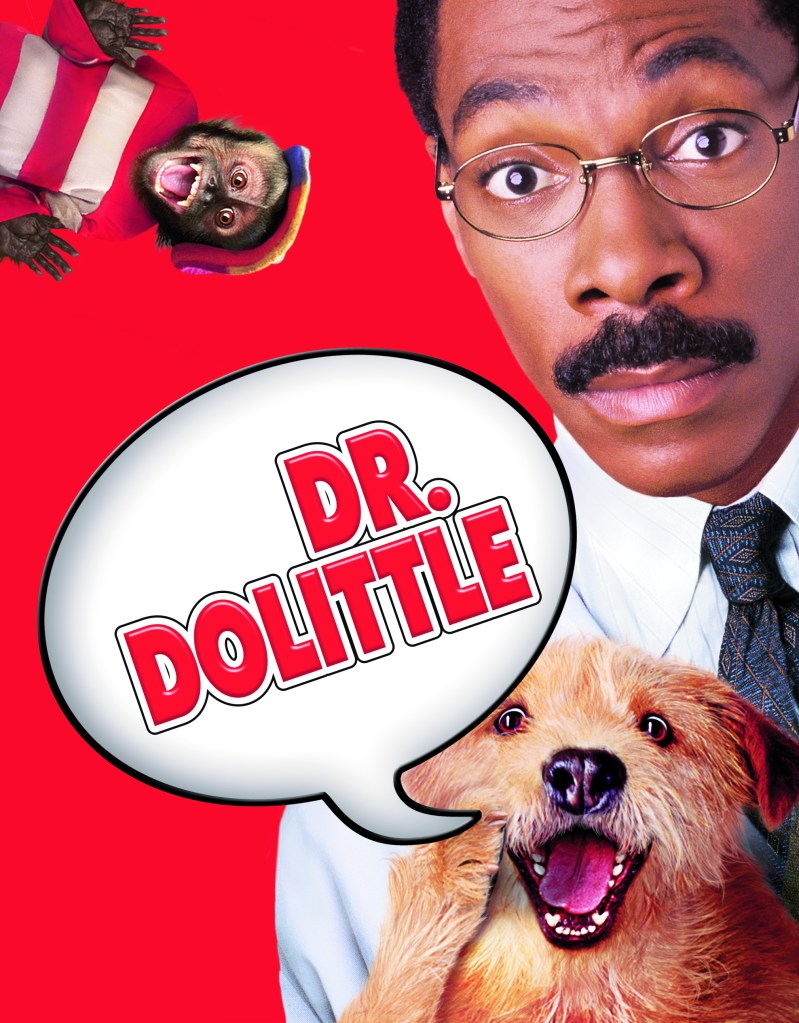

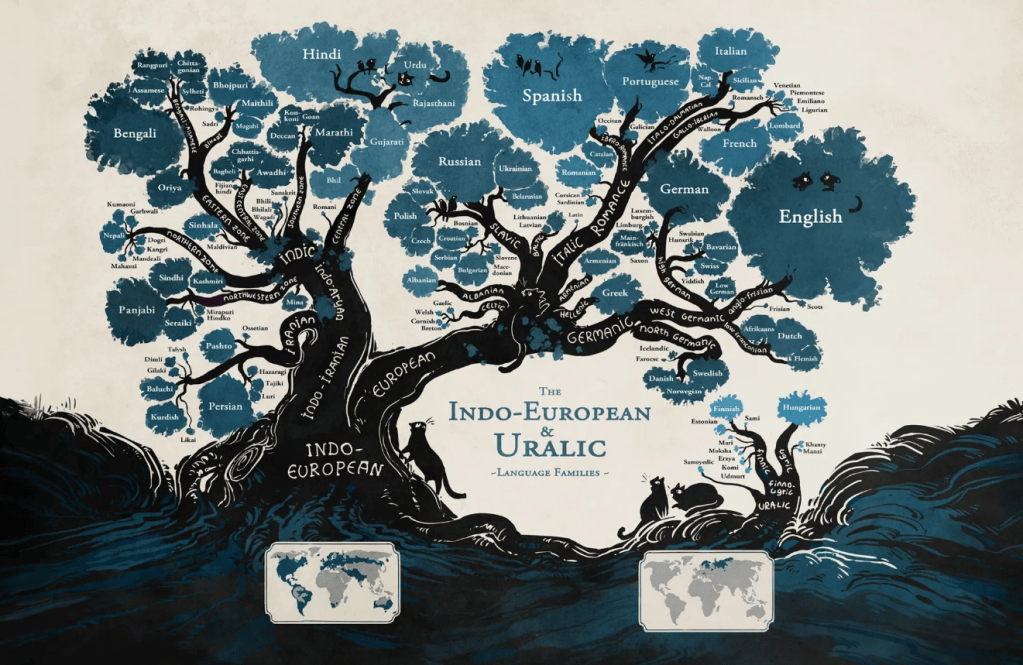

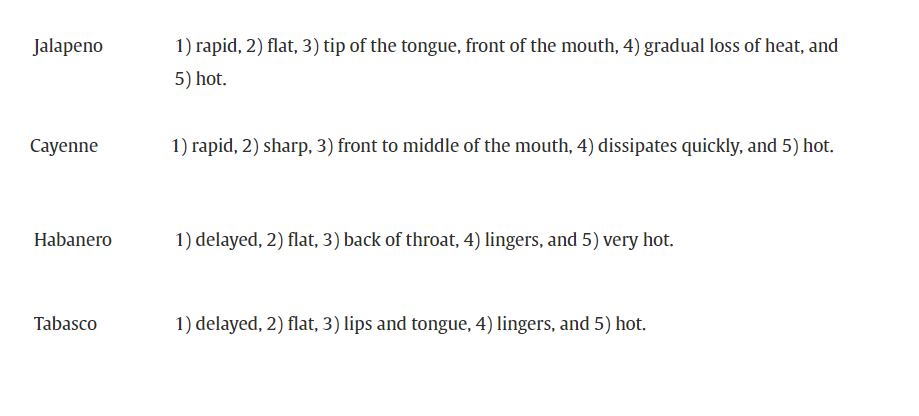





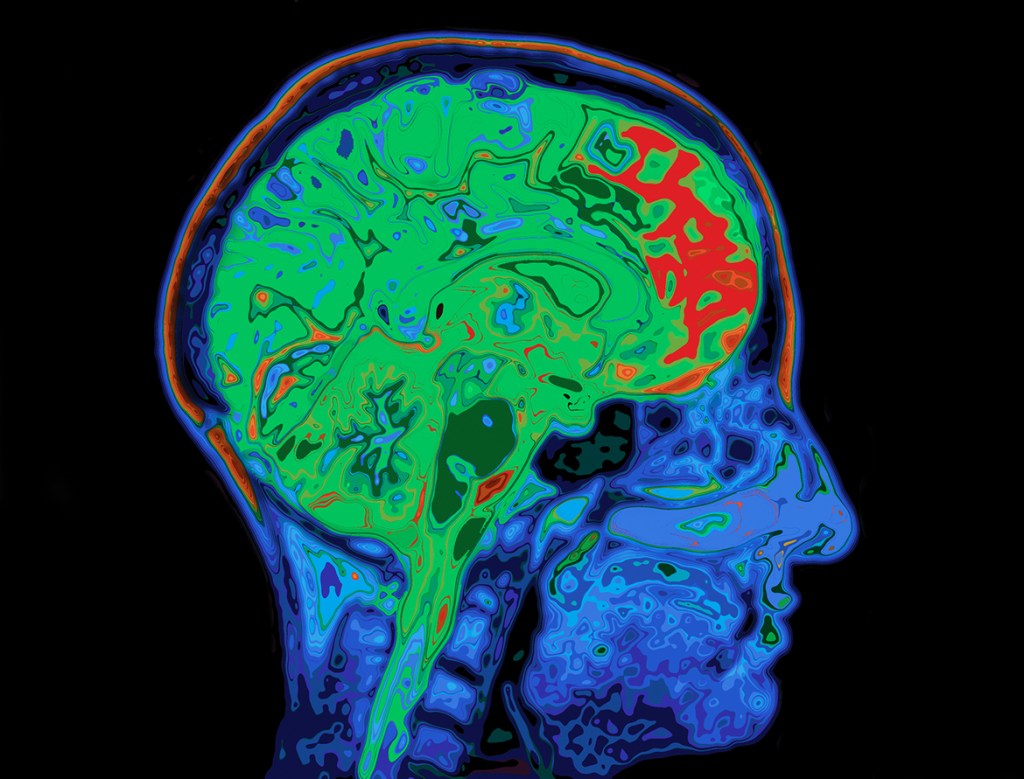


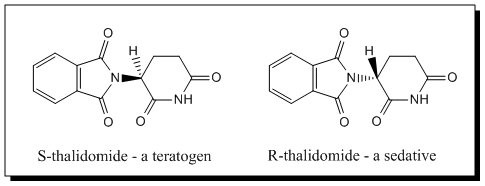




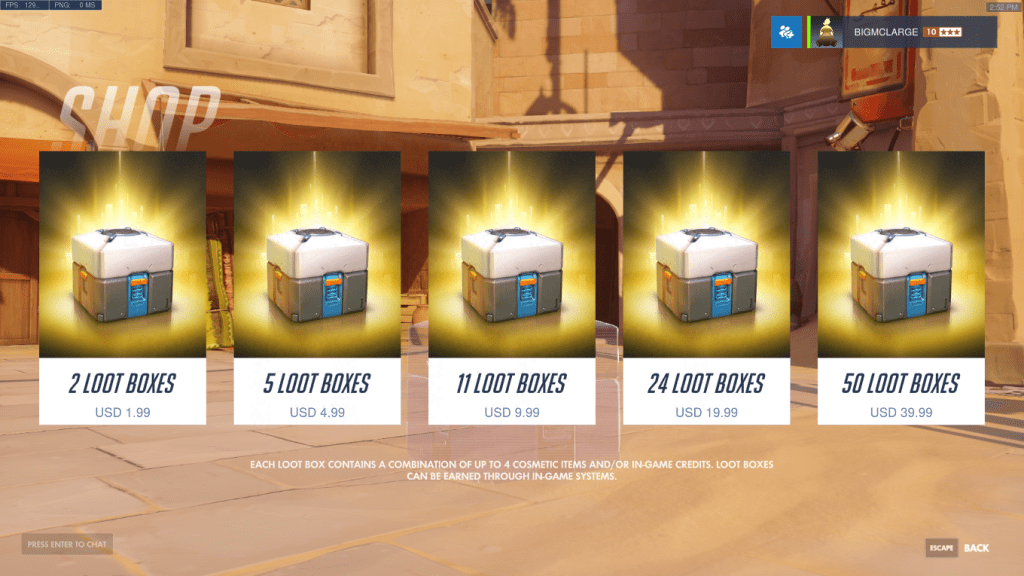
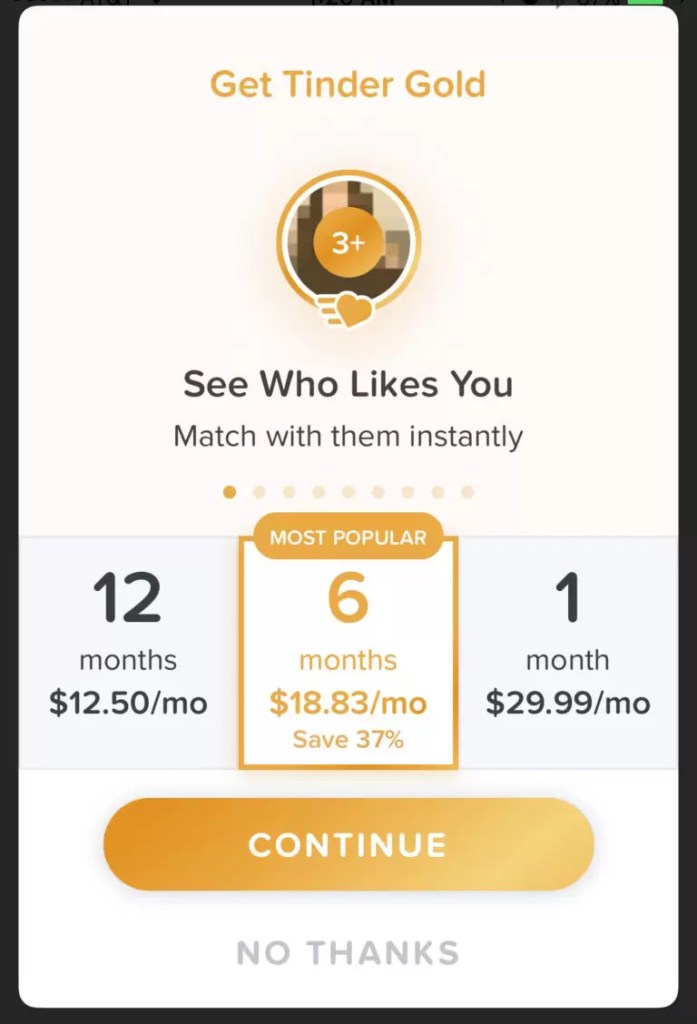

 Smarticles