
El Servico
Of all the gastronomic experiences in South America, the Ecuadorians will tell you that Ecuador is the best. The cuisine is a fusion between Peruvian and Colombian food with their own twist. Rich meat, Chinese-inspired chifa, tropical fruit, and vegetables – everything has a home on the Ecuadorian dinner table. It’s possible to get incredibly delicious, reasonably priced dishes on every street corner. In Quito, you can dine at night, overlooking a field of fireflies, as car headlights drift through the bejeweled streets. It’s a beautiful way to enjoy an evening.
There is one thing. It’s decidedly entertaining. The difference in service takes a little getting used to. Don’t get me wrong, it’s exceptionally friendly. But it’s also a bit like someone has told Ecuador how service at a restaurant works, but Ecuador wasn’t really listening. It was replying to a text or rolling a ciggy.
By way of example – there’s often a bit of a wait. That’s normal in South America. You should never be afraid to call someone over. But in Ecuador, after a good 30 minutes, we had 4 different waiters accost us within two minutes. They took our order and before the drinks could arrive, we were promptly asked if we’d like to order some more. And then again. It’s by no means unpleasant, the interaction is infused with the usual Ecuadorian charm and bonhomie. It’s just a little chaotic (the food was delicious incidentally – ribs with meat that fell off the bone). Next, when you order a café con leche, often you’ll receive a piping hot cup of milk. It’s very much a case of adding your own coffee. BYOC. Another time our waiter made a mistake with a plate. It happens, I’ve worked in hospitality, I know. He was full of apologies and offered to change the plate out which was very kind. At the end of the meal, we asked for the bill. He’d written on the bottom “Tip me”. We did of course.
None of this took away from the experience, only added to it. It’s an exceptional example of how things so similar on the face of it can be so different once you’re immersed. It makes me want to go back so I can see what else I can experience.
El Corte de Luz
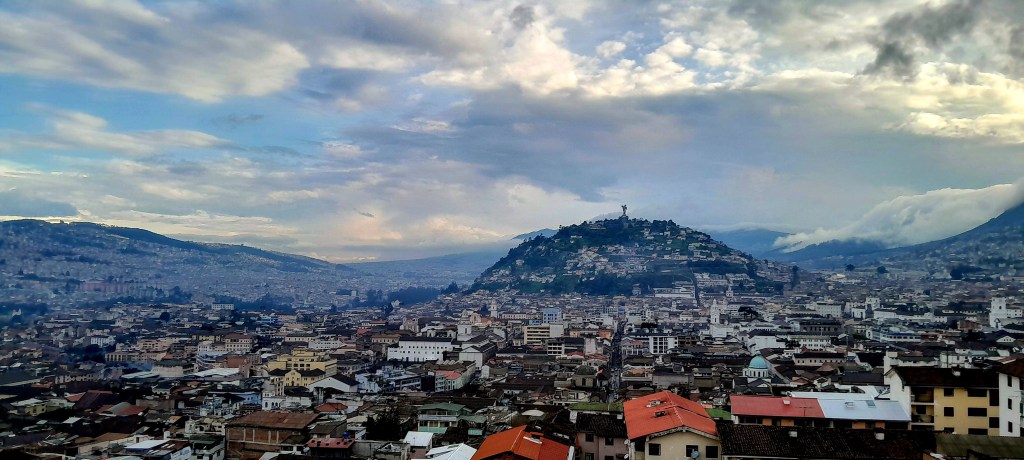
An eerie silence falls over the city. The buildings look deserted, haunted, dead. Smoke curls towards the sky in the distance. The green mountains and cloud-raked blue sky stay resolute and patient. You pull out your mobile. Nothing. No signal. A bizarre lack of activity. No notifications, alerts, messages, emails, calls. All the noise we have adapted to see as a calm routine is gone. Perturbed, you slide the useless rectangle back into your pocket habitually. What the fuck are you going to do now?
El Nino is a weather phenomenon that strikes every few years. It hits South America hard with bouts of intense weather. Unseasonably dry weather or torrential rain, seemingly at random. This is bad enough. Climate change has made these swings even more violent and less predictable (a dangerous combination). Its arrival in 2024 was preceded by more than 600 forest fires in Colombia, blazing through national parks and historic landmarks. But not all of its effects are so dramatic. Some are slow and creeping. The severely dry season had become a problem. In much of the north, hydroelectric dams are responsible for powering neighborhoods and industry. In fact, this part of the world is one of the best for harnessing renewable energy. With its abundance of water and rainfall, Colombia generates a huge amount of power via hydroelectric – so much so it shares a lot of this with Ecuador.
The problem is that when drought hits, Colombia turns off the taps (quite literally in this case). For fear of losing power themselves, they cut the supply to their erstwhile neighbours, leading to immensely popular, though no doubt necessary, emergency 8 hours blackouts in cities all over Ecuador.
So, the afternoons are spent in the gloom. No light. No heat. No fridge. No cooking. No internet. No living. The only thing you can hear is the whoops and cheers of fossil fuel lobbyists as they dance naked through the streets, covered head to toe in crude oil. Of course, essential places have power – hospitals and supermarkets. But for the average Jose, so used to being plugged into the social network, this enforced isolation is a stark contrast. It’s a reminder both of what we have gained through the triumph of technology, but also perhaps more poignantly, what we have given up. What we have lost.
Ley Seca
“It’s just a cup of fizzy tea” Santi said, winking at me. During Ecuadorian elections and referendums in Ecuador, something happens that would cause riots and widespread panic in the UK. As if it were possible to make these proceedings more torturous, for the whole weekend of an election, it is illegal to buy, sell, or consume alcohol.
The Ley Seca means that shops can’t sell booze, bars close up and the populace is left having to figure out what to do on a Friday and Saturday night. Dogs are walked furiously, their panting foaming mouths agape, eyes begging for rest. Long lost hobbies are rediscovered for 48 hours before Monday’s bin collection finds reams of shit crochet and bad paintings thrown aside once more. At least, this is what happens in theory. In reality, if you know where to look, you can find yourself a little spot for a “Té con gas”. These puddles in an otherwise dry state will conspicuously place bottles of non-alcoholic beer on each of the tables. These are a façade, ready to be brandished if a wandering policeman comes past. These bottles are enough to remove probable cause for a search, rendering the newly minted tea room impervious to legal intervention.
Of course, everyone knows what’s going on. At around 11pm, a cruiser drifts by, followed by a knock on the door. After a polite and knowing conversation, the request is made to wrap things up. We necked the final dribbles of our “Té con gas” and with the traditional Ecuadorian alacrity, we were up and out by 00:47 on the dot.
This is part 3 of a series on South America. To learn more about Colombia, click here. To learn more about Peru, click here.
 Smarticles
2 thoughts on “The Ecuador Set”