El Tráfico
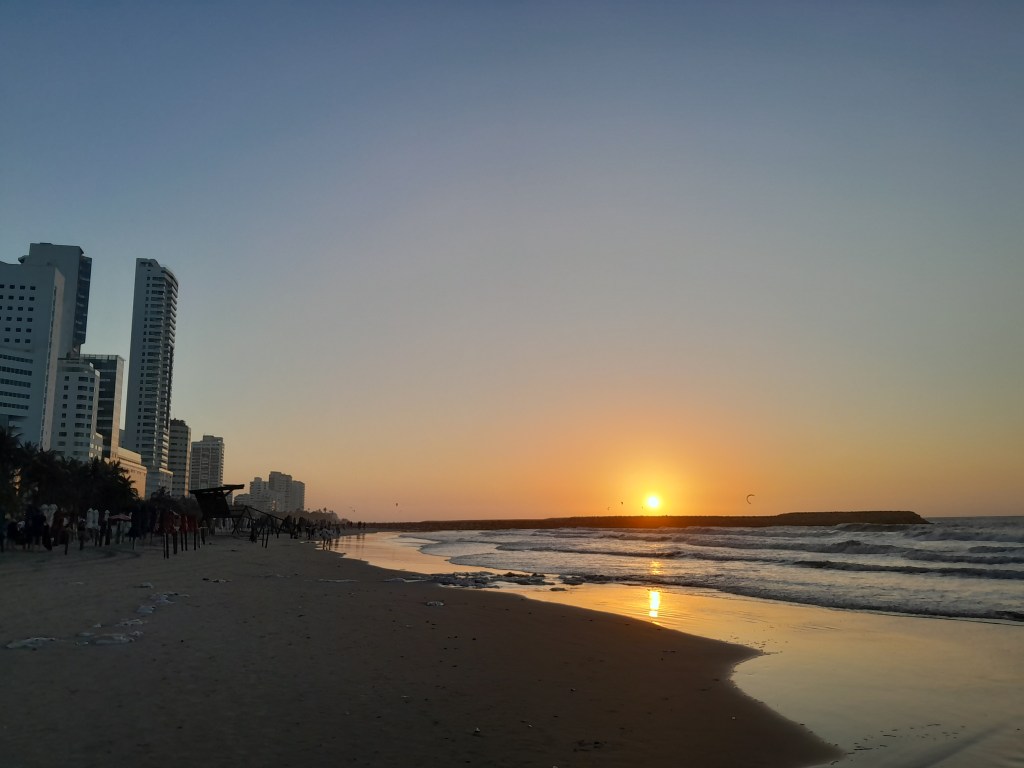
The intensity of the traffic in Colombia is startling. There’s aggression in every movement, a seemingly random desire to change lanes, or to stop suddenly and just get out of the car to check your engine or tyres. If you’re waiting to cross the road, the dark cars and yellow taxis speed past, evoking the same instinctive fear of yellow and black that’s stirred by a wasp buzzing around your face. And for good reason. In 2013, more than 8,000 people lost their lives on Colombia’s roads.
In Bogotá, the locals seemingly have a sixth sense for traffic. They know who’s paying attention, who’s on their phone, who’s feeling generous. They dart out and flit between stationary and slowing traffic. Zebra crossings exist, but more are more decorative than functional. To survive, your best hope is to shadow any old folk and blindly follow them in lockstep – the theory being, if they’ve lasted this long, they probably know what to look out for. It’s worth the side-eye and the funny looks.
Another intensely off-putting aspect of traffic in Colombia is the liberal use of the horn. When you arrive, you are routinely scared shitless. It feels like every taxi driver in the city is beeping at you. And they probably are. In Colombia, taxis beep to see if you want a pick-up, if someone is in the way, in recognition of fellow taxi drivers, if they see a girl, and when coming up to a crossroads, the horn providing a suitable alternative to the brakes or due care and attention. It turns out the horn is as much a language in Colombia as Spanish or dance.
It’s no safer inside a car, as you sit there, knuckles white, holding onto the seatbelt that doesn’t seem to work, while your driver alternates between texting and looking you dead in the eye to hammer home a point, wilfully ignoring the look of terror on your face as you see the car undulating over the central reservation like a plucked guitar string. It makes you miss the good things in life, like airbags and the highway code.
La Altitud
It was unclear why, as I heaved my way up the road to ascend Bogotá’s mountain, Monserrate, I was feeling quite so exhausted. I would by no means count myself as the fittest, but I can comfortably manage a 25-minute walk up a gradual incline. By minute 20, I sounded like the Fat Controller after a particularly strenuous wank. Bogotá is 2,640 metres above sea level, compared to London’s 11m. Above 2,500m, the air is thinner, meaning there is less oxygen.
It’s possible to experience a very mild form of altitude sickness – a nasty, insidious thing where the only real cure is to descend to lower altitude – and even if you don’t suffer the full-blown nausea and explosive gastric side-effects that altitude sickness can inspire, you can still very much feel it. Even the inhabitants of Bogotá tell you they notice the difference, especially when they ascend from lower places. Things are just a bit harder at altitude.
Monserrate stands watch over the city of Bogotá. It’s sheer and imposing, visible as the solid deep emerald green backdrop to most easterly facing streets. It stands at 3,152m. There are a couple of ways up, including a cable car and a little train, as well as a hike. The cable car takes little more than a minute to climb the 600m from the base to the top. When you get there, it’s easy to feel a little light-headed. Climbing the steps is suddenly quite difficult.
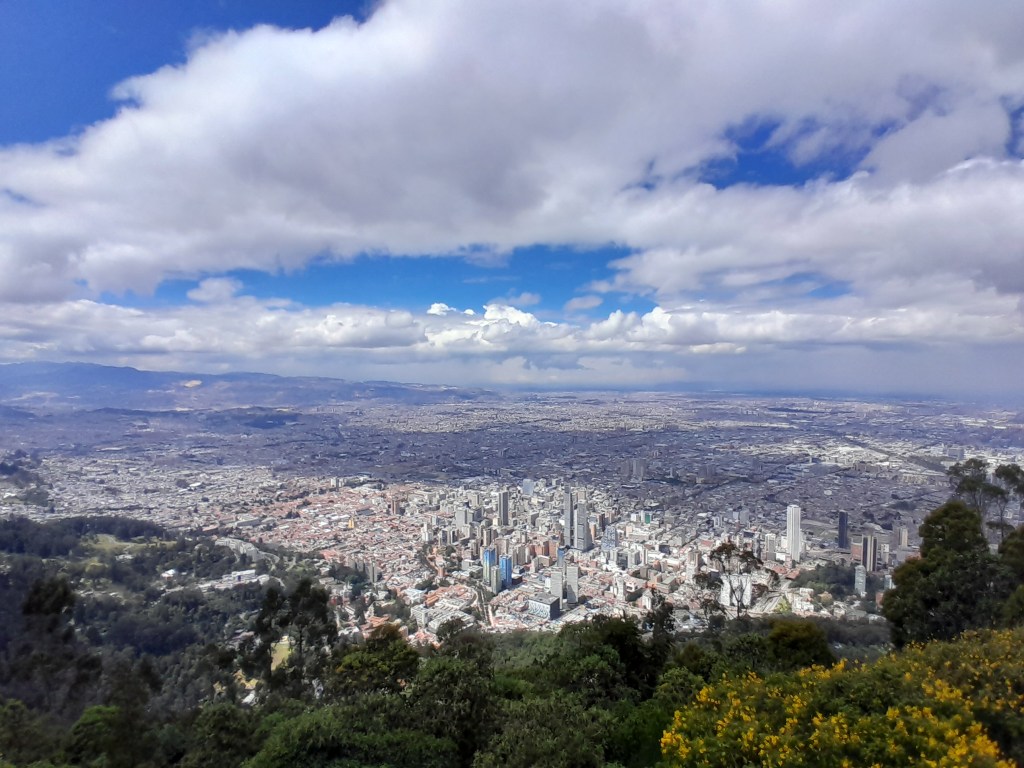
Luckily, there is a small café selling coca tea (a natural remedy for altitude and also a regularly chewed stimulant, alongside having other more nefarious uses that many Colombians are bitterly resentful of) and plenty of places to sit. When you can finally breathe easy, a few steps will bring you to a chest high wall. Ahead of you, below a cloud raked blue sky, the city of Bogotá stretches out for tens of kilometres in both directions. You’re towering over skyscrapers. The sheer mass of humanity is evident, a huge, dirty grey scar on the verdant green landscape. Turning to the other side, you see steep hills covered in more emerald trees, impossibly clinging to the near-vertical gradients as if their roots are fingertips, nails clinging on for dear life. Both the city and the forest have a different texture to those in England. There’s something more intense and vital about them.
Looking down, you can see a stark reminder of Bogotá’s colonial history – a small patch of red tile roofs that denotes the old town. Turning around towards the summit, there’s Basilico del Senor Ciado de Monserrate – a 17th century catholic shrine. The architecture is simple, whitewashed walls and simple carvings, emblematic of how difficult it must be to lug heavy catholic gold all the way up to the mountain’s zenith.
Walking the mountain is where you bump into some of the most impressive people. A huge percentage of Colombia’s economy is based on informal labour, that is, people without contracts and often without bosses selling goods or services. In Bogotá, some of these hardy folk have set up ramshackle shacks to sell snacks and drinks to the mountain’s pilgrims, a lifeline to those who have chosen pain and decided to hike the 1.5 miles up, rather than taking the easy, motorised route. These vendors climb up and down that mountain every day. They restock. They sit there at altitude for hours. It’s quite humbling. I used to complain about my commute on the Northern Line, but it makes you wonder what is preferable. A 600m climb to work with all your stock on your back, or a noseful of armpit.
Avianca
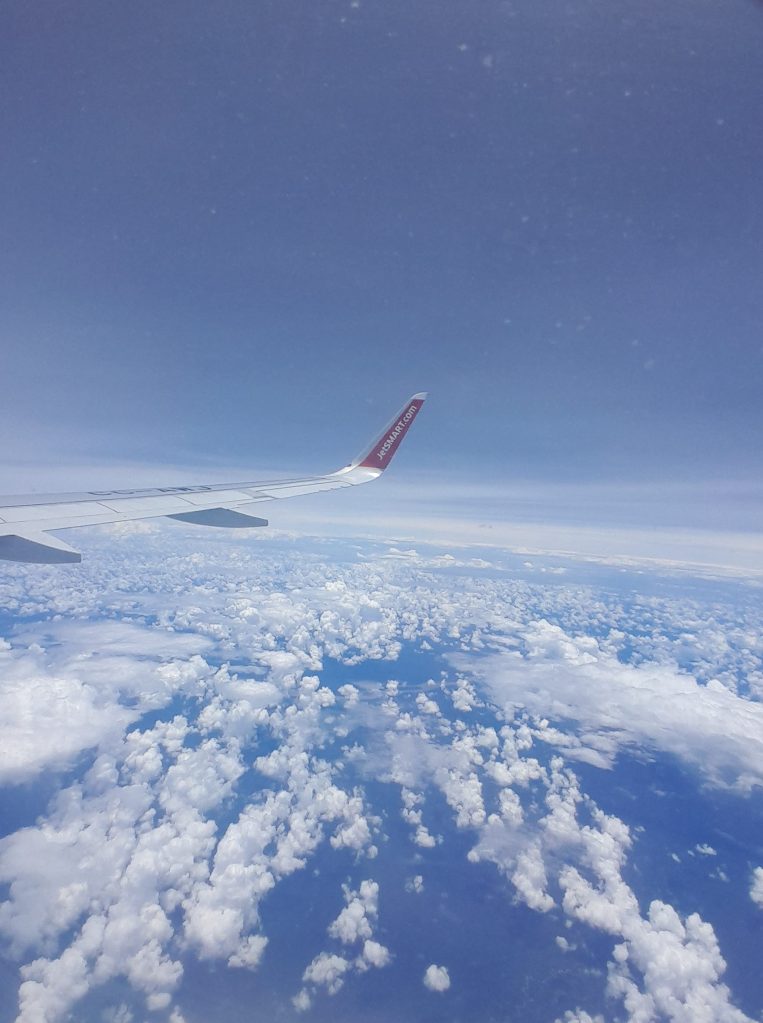
Sadly, the old images of graceful flight attendants and PanAm pilot parties have been replaced by flustered, underpaid Ryanair employees wrestling with unruly passengers, gritting their teeth to deliver an acerbic “Take care” and counting the seconds until they get some leave. Avianca, Colombia’s flag carrier, seems to have restored some of my faith in lower-cost airlines. Don’t get me wrong, I might have just got lucky. Everyone can be charming for 10 minutes. Not even EasyJet messes up every time. Just most of the time. But it seems to me that for whatever reason, Avianca has retained a bit of the old grace that must have made flying an experience rather than a commodity. Avianca was punctual and professional, with a sort of guarded efficiency. The way Avianca smiled at me when I asked for a cup of tea… In fact, Avianca was gorgeous; you don’t get lost in EasyJet’s eyes. What a strange feeling. You know what, yes, I’ll definitely fly Avianca again… wait a second. Oh, for f**k’s sake.
Café con Leche
P.G. Wodehouse, one of England’s finest, refers endearingly to tea as cups of “hot and strengthening.” There’s a beautiful simplicity to making tea. The mesmerising moment as the tea diffuses into the hot water, entropy at its most refined. A good steep for about 4 minutes and it’s ready to go, milk and sugar to taste.
I come from a long line of tea drinkers. My grandad served in the Desert Rats and across north Africa and Italy, an intelligent and shrewd war veteran turned intelligent and shrewd babysitter. He taught me to make tea at an age that would cause a stir on Mumsnet if it got out there. And since then, tea has been my life for 30 years – trying different blends and types, learning why tea in Europe is different (they get their tea from Asia, while England gets its tea from Africa, which provides a far more bitter flavour profile). So, a trip to Colombia raised a few questions, the primary of which being how many tea bags could I tape to my body before having to declare it to customs. Before long, my access to tea had diminished, leaving only one thing for it – I had to get to like coffee.
Coming to coffee at 30 is a bit odd. It’s very bitter in comparison to tea. Even when drinking beans that God Himself has touched, black coffee remains bitter and brutal, leaving a lingering aftertaste that is quite unpleasant to the unrefined palate. Naturally, you drown it in milk and sugar to overcompensate, which leads to the next question, “Would you like any coffee with your sugary milk?” Enter the Latte. The latte seems wrong on a fundamental level, with enough sugar to bake a cake. By the time I was done, I felt like a baby calf with sticky teeth. That simply wouldn’t do.
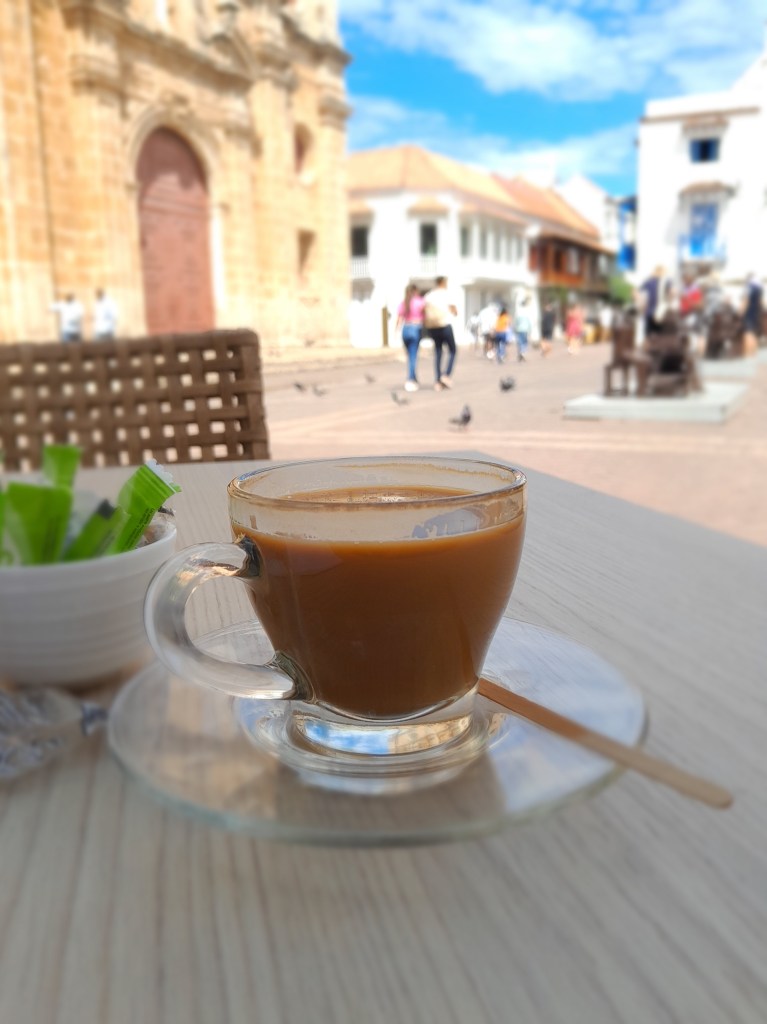
Next, I tried something different. I found a café in Cartagena (in the Plaza de Claver). The plaza is filled with cast-iron sculptures in different poses. Tourists weave in amongst them, ogling the old church that dominates one side. The tourists are stalked by vendors, arms draped with beads, small wooden chess sets, or palettes of cigarettes. Pigeons congregate under tables, trying to stay out of the laser beam that is the Caribbean sun. At 35 degrees C and a UV Index of 11, unprotected skin of the average Brit would burn in 11 minutes (In reality, the skin of an average Brit on holiday is already burned, so maybe that’s less to worry about). High above, red-headed turkey vultures soar on thermals, drifting lazily through the air looking for carrion to devour.
So began my experiment. I sipped my coffee black. No, that was too much. I added some milk. Better, but still bitter. I added some sugar. Better still. And with a little more milk and a touch more sugar, suddenly I had an epiphany. It was delicious. I noticed how the sharpness was rounded off, allowing the flavours and depth to shine through. It was drawing me in, enticing another sip, and another. My mind became suddenly full of tasting notes and flavour profiles. Almost immediately, I became aware of a presence behind me. I turned to see the barista standing there. Gently, he placed his hand on my shoulder, a tear forming at the corner of his eye. “You entered a boy,” he said in melodic, accented English, “Now you are a man.” As I stood, I suddenly felt the breeze on my feet. My shoes had turned into sandals, my shirt was now linen with gentle pastel stripes. My new beard glistened in the sunshine, reaching up my cheeks and connecting to a freshly-bunned top knot, which held ancient secrets of blends and roasting methodology. I don’t know what happened next, but suddenly everyone in the café was applauding. The pigeons had lined up and were singing in beautiful harmony. I looked around at the sight before me, almost unable to believe what I was seeing, and asked gently, “What the f**k is in this stuff?”

Las Picaduras
The babbling stream threw a kaleidoscope of light against the vines as the water rushed between moss-green boulders of ancient glacial stone, dappled by clear sunlight. There was a beautiful, chaotic geometry that only nature seems able to create at will. Almost lazily, a small shape drifts through the air, legs outstretched, reaching into the morning haze. You would be forgiven for thinking it was simply enjoying the warm summer morning as much as you were. But there is something far more sinister afoot.
Shockingly, Colombia contains the greatest concentration of species in the world. This eclectic mix is possible for a few reasons – it is one of a handful of nations sharing a coast with both the Caribbean Sea and the Pacific. It’s a country of microclimates, from the burning Caribbean coast, lazy riviera, and high tropics to snow-capped mountains. Each microclimate has its own species, evolving for the specific challenges you find there. For this reason, the rapidly developing equatorial nation boasts nearly 20% of the world’s species, all in a single country. This makes it a hotspot for researchers and holidaymakers alike. What they don’t tell you, however, is that a significant proportion of these species want to eat you.
The innocuous flies, drifting through the air that morning, to land seemingly accidentally on your exposed ankles are no more than a few millimeters long. But they have sensed your CO2 from a great distance. Unbeknownst to you, as soon as they land, they begin using specialised, flesh-tearing jaws to rip your very lifeblood from your skin, injecting you with chemicals so that the blood flows and you don’t feel a thing – all to feed their parasitic brood. The only evidence of their crime is after the fact, as blood trickles gently down your leg, leaving a raised and itchy welt – an allergic reaction to their anticoagulant anesthetic. This reaction is the basis of the “Tropical Stocking” – the knee-high covering of red bites that adorns the legs of holidaymakers; a sure sign that you’re both delicious and lacking in DEET. It’s flattering in some ways…
Bailando
One of the sweetest things is how many Colombians learn to dance. Although it seems as ubiquitous as language, as though everyone is taught in school, actually, it’s generational. Kids will dance with their abuelos (grandparents) as soon as they are able to stand. They will be inculcated with rhythm, imitating the sway of hips and the tapping of feet. Over the years, this early foundation of muscle memory is transformed into the utterly engrossing capability that graces so many Colombian streets and bars.
One of the most incredible moments is when two strangers come together and create a routine that is utterly spontaneous and entirely magical. They can dance with a soul-deep synergy, reading, leading, and following in a way that seems impossible to the stiff embodiment of “white men can’t dance” such as myself. One of my overarching goals for the trip was to learn to dance (alongside Spanish fluency and volunteering somewhere). Why? The idea of organised, complex, social dancing with other people scares the bejeezers out of me.
The feeling a lot of people get from public speaking or getting up on stage – that is dancing for me. My heart beats faster, my hands are so clammy it’s a surprise I don’t grow a pearl in each palm. Even getting drunk doesn’t help. In fact, it just makes me more comfortable being a coward. So, sitting there, appraising the dance floor in Costeño Beach, full of natural dancers brandishing their beauty and elegance at me, I made a very stalwart decision that I was not moving.
I’d overlooked one crucial detail, however. I’d shared my mission with a pair of wonderful girls from Sweden who were old-timers on the traveling circuit. As Alva plied me with a Moscow mule that was strong enough to resurrect Lenin, mischief in her eyes, Nova reached out her hand and took mine, gently but with no room for escape. Soon, the room was blessed with some of the stiffest, ill-timed salsa that has ever been attempted, made worse by really wanting to impress my chaperones. My style was much like that of a log, with one end tied to the roof and unceremoniously spun in circles. It was exhausting. While I wouldn’t use the word “fun” to describe the experience, it did begin to open a door.
I had quite literally taken my first steps, and I realised with a little more exposure (and a lot more practice) this was something that I maybe might start to begin considering that I could potentially one day enjoy…
El Pobre
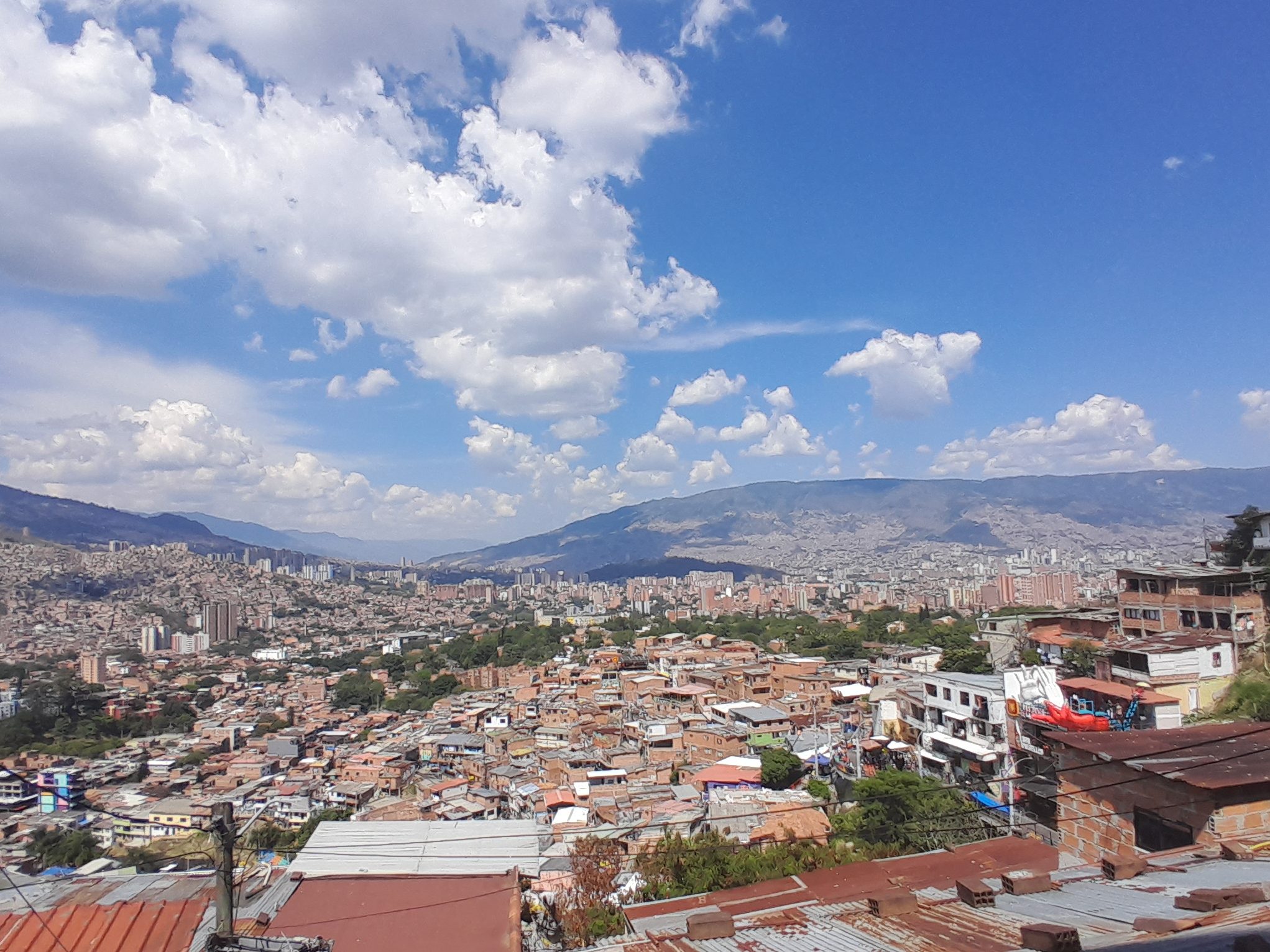
Colombia has seen an incredible level of growth since 1990, despite decades of violence and upheaval. The period signaled a shift from a mainly agrarian culture to an industrial nation, whose primary exports include oil and precious metals. This transition was not easy, far from it. But, since the peace agreements signed between the government and the FARC militia in 2017, there has been a period of relative stability that has allowed tourism to prosper and industry to consolidate.
Now, it is the third-largest regional economy (behind Brazil and Argentina). It has the 46th largest GDP in the world. You can see the impact of this growth with your own eyes, with developments across every major city and in a great deal of the countryside in between.
Despite this explosive growth, 25% of Colombia’s people live below the poverty line. Half a million children are food insecure. A great number of these people live on less than $2 per day. Despite its national wealth, Colombia has one of the largest gaps between rich and poor. On the GINI coefficient, a measure designed to track inequality throughout the world, Colombia scores 0.6 (with 1 being the most unequal possible). It’s ranked number 10 on the list.
On the ground, this means that the fruits of the development are not yet being felt by the Colombians themselves. Despite some attempts by more progressive governors (Medellín have suggested a small pay rise for public sector workers in recent months), the reality is that a staggering number of people live in desperate conditions. Devastating homelessness is everywhere, especially prevalent in the baking northern cities, where widespread corruption has led to failures in public services and welfare. At its worst, people are left lying in the streets, desperately seeking shade from the blistering sun. For everyone else, it leaves them scraping a living, fostering an atmosphere of opportunism, scams and frauds – everything from simple overcharging to doctoring receipts to plain old violence.
But, out of this pain, there remains dignity in Colombia. Alongside, a very tangible sense of community. It is rare for the destitute of Colombia to simply beg. They offer to perform, exchange goods, and provide services. In turn, many Colombians display great generosity, helping where they can while significantly richer foreigners turn away. It seems that for many Colombians, this intrinsic kindness and community are a necessary counter to the many years of pain and conflict that the country and its people have endured. The result – manners matter and kindness counts.
Para Concluir
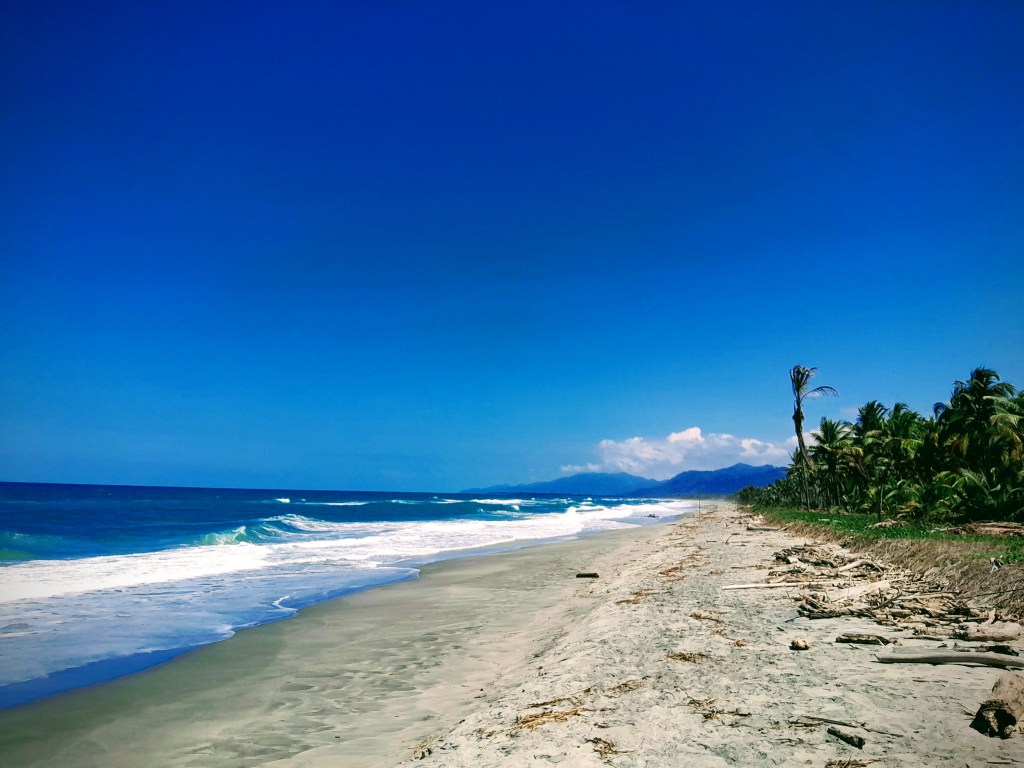
Waves crash against the shore, buffeted by a strong breeze that cools the heat from your forehead. You sit in dappled sunlight, feeling the wet sand between your toes. You look left and then right, the pale sand stretching all the way into the distance. Through the haze, thrown up by the white caps, you can see green mountains framing the beach on each side. It stretches nearly as far as the eye can see. Looking forward again, you see a pelican brushing the wave crests. You see it spot something and suddenly dive, throwing up spray as it darts into the blue waters. Behind you, deep emerald-green riviera. Indifferent insects bumble through the air and small lizards pause warily on top of dry logs, sunning themselves, waiting to pounce on competition (or potential mates). You continue your journey through the Riviera as it gives way to hot and sticky mangroves. A chorus of birds and insects forms a deafening cacophony. As you climb a little higher, the sound remains but the chords change, and the animals are different as the air cools around you. Ancient waterfalls cut through hard rock, working their way defiantly towards the sea. Higher still, the heat disappears altogether. Fat raindrops fall, cold and heavy. For the first time since your journey began at the coast, you feel a chill. You pull an overshirt from your bag, and slide it on to protect you from the elements. Soon the green gives way to stark rock and snow. The air becomes thinner, the mountains are barren monuments; shepherds to the flock of deep green jungle all around them.
Colombia is a land of microclimates. The journey described here would take little more than a few days to cross each one of these unique ecosystems. It’s an essential reason for the enormous biodiversity the country enjoys. It also explains its rarefied beauty. We are all a product of our environment, and Colombia is no exception. Its microclimates are mirrored in its settlements and reflected in its population.
Part of this spectrum comes from years of civil unrest, wounds still visible, as well as imported corruption, part of the Spanish colonial legacy from hundreds of years ago. These scars run a little deeper. Over the last decade, some 50,000 government officials have been implicated in forms of corruption.
This is deeply disenfranchising. In the last election, nearly half of Colombians chose not to vote. The impact is that Colombia is a patchwork of progress. From the hyper-technological Medellín, with its cable cars connecting the poorest barrios with services and opportunity in the inner city, to the crumbling pavements and chipped paint of Santa Marta where the intense heat punishes the dispossessed with their own personal hell each day.
Every city is different, largely dependent on where their investment has come from, and which political palms have been greased. Bogotá has seen massive investment in industries such as pharmaceuticals and aerospace. Its utilities and infrastructure have been largely neglected – the promised metro system having been replaced by a bus service for many years. In Cartagena, the focus on its export potential has seen huge investment with billions being announced to improve its port capabilities and shore up Colombia’s oil export dominance in the region. At the same time, homelessness is extensive and the water is unsafe to drink. Medellín has sprouted coffee-sipping co-working spaces and plush high-rise tenements to support the massive influx of digital nomads (and by extension their money). Meanwhile, the city’s native inhabitants are seemingly pushed to one side, prostitution, and addiction growing like tumours in the shade of newly minted tower blocks that many locals will probably never see the inside of.
Much like the natural parts of Colombia, there is great beauty to be found in the cities of Colombia. However, as with its tropical microclimates, poisonous things lurk there too. It is undeniable that the country is prospering as it hasn’t prospered for a century. For many, there’s a sense of relief.
Finally, this beautiful country is developing into something it always had the potential to be. For others, there is a sense of frustration as, once again, the massive wealth generated by that progress is not tricking down to the people. With this progress comes a greater need for accountability and responsibility on behalf of the executive branch, in keeping with the spirit of kindness and generosity that is intrinsic in so many of its people. I can think of few citizens of nations who deserve it more.
 Smarticles
3 thoughts on “The Colombia Set”