Read time: 3 mins
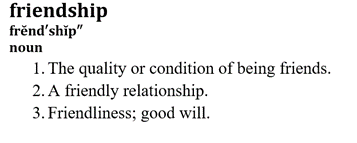
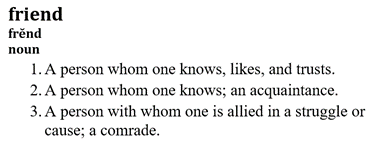
Our friends inspire significant emotion when we think about them. But when we are pressed to actually define friendship and express what makes our friends our friends, it can often be difficult to find the words.
The poet and author David Whyte wrote a book in 2014 called Consolations. In it, he examines words such as Anger, Pain, Beauty and Confession, dissecting their meaning in profound ways. He also explores the idea of friendship.
Friendship according to David Whyte
Fundamentally, friendship is a mirror. Through our friends we are able to see ourselves – they offer a reflection of our words and actions; at their best and also at their worst.
Our friends tend to encourage us to be better, nurturing the likeable and kind parts of our character, while also discouraging the things that diminish us and make us lesser. This often takes some effort, something that traditional definitions of friendship tend to miss. To be a friend requires an ongoing and adaptive tolerance of the other.
One of the most potent tools in any friendship comes in the form of forgiveness. It’s fair to say that without our ability to forgive, we would still be clad in mammoth skin wondering why we get cold when the sky cries. Friendship is an enduring reminder of the frequency and power of forgiveness and an IOU that is always available for us to give out when we need to.
Through forgiveness and tolerance, friendship can offer an avenue to rekindle old relationships. It can soothe problems between partners or cool down hot heads at work, offer solace to unrequited love and offer a bridge for the relationships between children and their parents as they grow.
According to Whyte, losing friendships is something to be wary of as it could be a sign that we are losing ourselves – to our ego or professional identity for example. It’s easy when life is going either very well or very badly to forget the people who can make things better and who will be there when it doesn’t go your way.
He suggests that friendship transcends death. It continues to develop internally after one-half of the partnership has passed on. One can recall and engage with the opinions, perspectives and quips, things that the friend would have liked and disliked far into the future. This inner dialogue continues to inform our perspective on the world.
As we get older, Whyte suggests that the quality of our friendships matures as well. The deeper our appreciation for others, the deeper our appreciation for the natural order. He suggests that improving our understanding of friendship means we can respond better to problems that impact us on a societal or global level.
Ultimately though, for Whyte, friendship comes down to witness. It’s about having someone who sees you and remembers you: your value, your journey and your milestones. It’s about spending time with people you admire, learning from those moments when your friends truly (inexplicably sometimes) impress you. Then it’s about trying to apply the lessons from their company and their conversation to your own life, passing it on to the people we care about and the world we live in.
Whyte’s description is beautiful and offers a radical, raw take on something that no one should go without. Its importance can be easily forgotten. At the moment of writing, 1 in 7 young men in America report having no friends. Some of us will be lucky enough never to experience this in our lives. Others will be unable to avoid it at one point or another. But to be without friendship is incredibly damaging both for the individual and the fabric of society. People who are socially isolated and lonely often don’t exercise and don’t sleep. This increases the risk of stroke, heart disease and premature mortality. In fact, prolonged social isolation has a similar impact on a person’s health as smoking 15 cigarettes each day.
With young people finding it so hard to make friends and struggling to keep them, it makes sense that we try to better understand friendship and examine it from different perspectives. David Whyte’s writing helps us do that.
Consolations is available to buy via any good book store: https://www.waterstones.com/book/consolations/david-whyte/maria-popova/9781786897633
You can read Whyte’s interpretation here: https://www.likevillepodcast.com/articles/2021/5/15/friendship-a-selection-from-david-whytes-consolations-2020
He has a characteristic voice which makes his narration relaxing and compelling. You can view this here: https://www.youtube.com/watch?v=5scnhCFuWiI
 Smarticles
I love the idea of friendships transcending death. Something I’ve never thought about but it rings so true. In some ways, then, some friendships truly never end
LikeLike