We seem to be enthralled by liars. We all know lying is bad but there’s something dangerous and captivating about deception. Famous liars pepper literature; spies like James Bond, sociopaths like Sherlock Holmes, fantasists like Gatsby or capitalists like Jordan Belfort. You can go back to the story of Adam and Eve and see that a lie created the original sin. Fast forwards 6000 years or so (depending on who you ask), True Crime documentaries are top-watched and reality TV is dominated by programs where various contestants are frauds, moles, plants or traitors. In fact, they seem to be selected for their duplicity.
And to make matters even more confusing, everybody lies. All the time. If you are in a conversation with someone new for more than 10 minutes, there’s a 20% chance you’re going to tell a lie. Over the course of a week, statistically, you’ll lie to 30% of the people you meet. Men and women lie at exactly the same frequency (albeit about different things).
So is lying really a bad thing? And are all lies the same?
Lying and the brain
Firstly, there are key components in the brain that light up like a Christmas tree when people lie. In one study, researchers put participants in an fMRI machine (which is a large machine which allows you to see blood flow in the brain, highlighted on a screen. More blood flow means more activity which means that part of the brain is being used more heavily at any given moment).
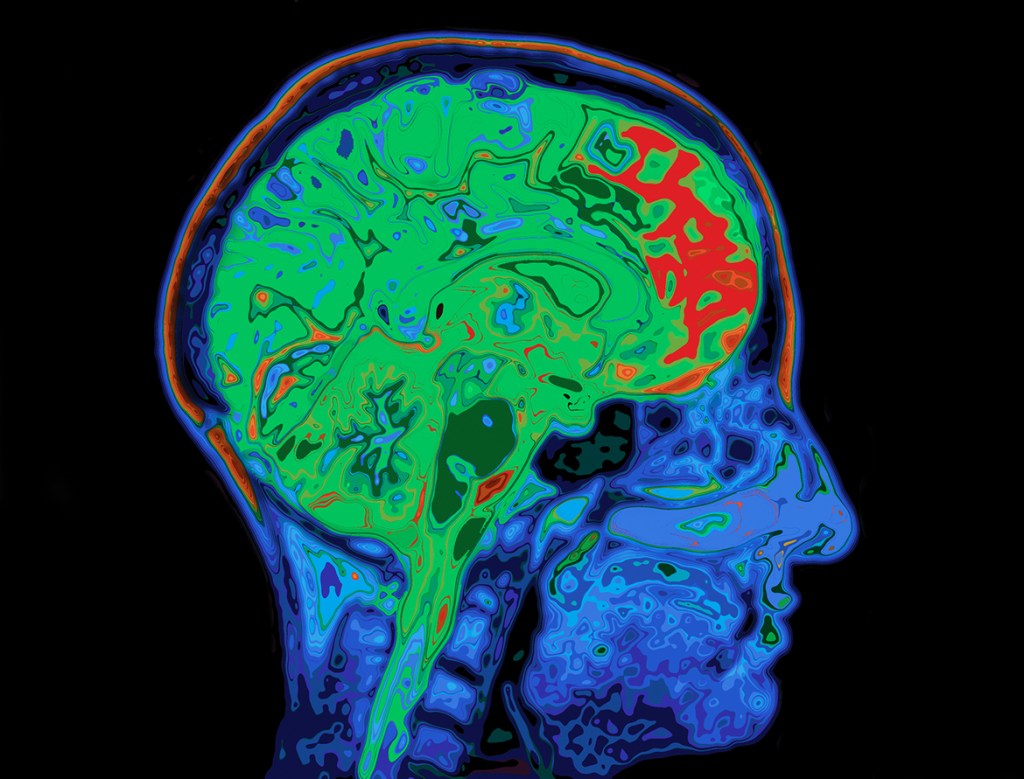
Researchers asked participants to play a little game. They got money for winning. And, about halfway through, the system displayed some sort of “error” where it supposedly didn’t record their original answer. The participants were then given an opportunity to lie. Those who took the opportunity showed massively increased activity in some key areas that controlled higher thinking, memory and emotion.
In fact, fMRI imaging is said to be more accurate at detecting lies than traditional polygraphs (the original lie detectors from movies or the Jeremy Kyle show). Some research has suggested that combining these two techniques together could lead to incredibly accurate results in terms of telling if someone is telling the truth. They could even be combined with strategic questioning to find out concealed information.
So what parts of the brain are responsible for lying?
- Pre-frontal Cortex – this is the newest part of the brain in evolutionary terms and is responsible for complex problem-solving and for modulating our behaviour. Its role in lying seems to be twofold. On the one hand, you need to be able to come up with a good lie that’s believable. This requires some horsepower. On the other hand, you need to suppress the truth and ensure you stick to your story. Both of these are taxing.
- Amygdala – from the newest to one of the oldest parts of the brain. The amygdala is part of the system responsible for emotion. On the one hand, lying and suppressing the truth can spark feelings of guilt and panic. On the other, for a lie to be passable, it requires an emotional component.
- Temporal lobes – involved in working memory, lies often require knitting information from memory with newly fantastic and imaginary scenarios. This is tricky work. A lie about flying to Antarctica will require you to remember what it’s like there, the qualities you can recall about the peninsula, the food you ate, and the things you saw. Then you need to weave that knowledge into the lie. This is effortful and requires your working memory.
- Hippocampus – where do those memories of Antartica come from? Maybe you read about it, or perhaps you saw something on TV. All of these memories need to be accessed in order to create a proper lie, which is the role of the hippocampus. It’s the centre for long-term memory.
There are some serious ethical issues when it comes to using fMRI to detect lies. Firstly, there is some concern about whether the interpretation is actually correct. A meta-study done by Martha J Farah et al (2014) showed that there is a lot of disagreement about which areas are truly involved. They also found a lot of crossover between the brains of liars and the brains of truth-tellers – perhaps because of the need to recall information or possibly the creative nature of memory. The other problem with using fMRI as a lie detector is how easy they are to hoodwink. Another study detected 100% of lying participants. When the same participants were told to imperceptibly wiggle a finger or toe, the accuracy diminished to 33%.

Despite these issues, there are some interesting things to pay attention to which apply directly to whether or not it’s bad to lie. Firstly, the more participants lied, the less the emotional areas of the brain lit up. They simply didn’t care as much. And naturally, the less they cared, the bigger the lies became. The bigger they got, the less emotionally taxing they were. And so on. This shows that lying frequently, even the innocuous white lies told in an experimental environment, can fundamentally change the brain. There’s a slippery slope effect, which applies both to lies we tell others as well as lies we tell ourselves. This explains how some people can get themselves into such incredibly hot water – few people start out at the deceptive Everest of Bernie Madoff, who scammed celebrities out of millions of dollars, or Billy McFarland who created the ill-fated Fyre Festival scam. These people start small and over time, lying becomes easier and easier. They never stop and eventually lying is as automatic as breathing.
The other thing to bear in mind is that lying is very taxing on brain function. Participants who told the truth often showed significantly lower levels of activity than their duplicitous counterparts. Why? Telling the truth is easy. There’s nothing to create, nothing to construct, nothing to suppress and only experience to remember. In most cases, there is no emotional component because participants never even considered the possibility of lying. Liars on the other hand have to undergo some serious mental gymnastics – they not only need to create a convincing story but also one that will be advantageous to them rather than get them deeper into trouble. Then, for the lie to remain undiscovered, they will need to remember precise details about the lie forever more. This is hard work.
What about people who are lied to? There is a strange parallel between the brains of the liars and the brains of those they’ve betrayed. The amygdala and limbic system, responsible for fight or flight, often become very active during the moments that a victim responds to betrayal. The activity is very similar to the response to a physical threat. There’s activity in the hippocampus as the victim frantically tries to re-evaluate their long-term memory, scouring for evidence, things they’ve missed and the potential impact of the lie on other events or relationships. In this way, there is a strange symmetry between the liar and the lied-to. And similarly, repeated betrayal can change the brain in the same way as repeated deception does. Victims can often become numb and less likely to feel the same level of emotion towards stimuli.
Is lying bad?
The idea of someone we trust implicitly lying to us is incredibly painful. So much so that given a choice, most of us would ask for a blunt and painful truth rather than a dishonest friend.
And yet, that same standard does not apply to other situations we find ourselves in. With strangers, it can be almost automatic to say things like “I don’t have any change” or “I’m sorry I have a girlfriend/boyfriend”. With friends and family, little mistruths like “It’s in the post” or “I can’t come because I feel ill” are familiar to us all. These are so commonplace that they have become cliché. In a poll conducted by Zety, a US employment site, 96% of respondents had lied about being ill to get off work. And while it can be argued these aren’t lies so much as euphemisms, in reality, they remain deceptive. And yet, everybody does it.
White lies
Surely, telling a lie to someone to help them out is a good thing? It’s tempting to tell white lies to reassure or to soothe. However, white lies are a problem for several reasons. A white lie can cause harm to the other person – especially if hearing the truth would be genuinely good for them. For example, if someone asks if their joke is funny and you feel it is an awful joke, you would be doing the person (and the world) a favour by being honest. This could arguably apply to any situation to do with the social, emotional or physical health of the friend. The same applies to false encouragement. Someone could pour so much into an endeavour which is doomed to fail. Lying to them, and encouraging them to continue, would hurt them. In these cases, the truth would reduce harm and inspire growth significantly more than a white lie would. It’s better to fail fast.
Feedback on the work we do or the stories we tell is important. It helps us to develop and grow. Faint praise for children does not help them improve or engage with the world. In the real world, young people will not be lavished with praise as parents so often do, and this could negatively impact the child’s development, ability and confidence. Likewise, faint praise as an adult does not help us hone our skills. In fact, it encourages stagnation. It also impacts trust. If we suspect that someone is insincere in their praise, then we are less likely to take value from their feedback in the future. That’s not to say we need to be brutal with the truth and cut the legs off of every aspiring young person who simply needs more practice. But we ought to be mindful of our feedback and communicate in a way that’s honest but still positive.
Lying and Trust
Lying impacts trust and the social cohesion that binds us together. For example, imagine hearing a friend lie on the phone, with graceful ease. It is impossible not to wonder if they have lied to you in the same way at some point. Does this undermine your relationship? How about lying to, or in front, of children. Children are often told to tell the truth, which can create embarrassing incidents when kids call out their parents publicly. Often this will lead to embarrassment or even perhaps anger on the parent’s part. What does this reaction tell the child about the value of honesty? While tact is important, one can be tactful without being dishonest.
So, in most everyday cases, it seems like we have a social and moral obligation not to lie. However, there are some pretty convincing scenarios where it seems that one ought to lie. For example, your friend looks terrible but does not have time or change anything about it. Or, you are confronted with a bloodthirsty mob who is seeking the wrongly accused innocent child who’s hidden in your attic. In these moments, most of us would consider a lie to be recommended, let alone acceptable. If the truth doesn’t help or if the truth may directly lead to harm, then are we not obliged to lie? Would it be viable to say that one should only lie if there is no other option? But in that case, who draws the line? It’s very likely that the line will be different for everyone, which becomes a slippery slope.
The devil on our shoulder
It seems reasonable to suggest that 99.99% of the time, we ought to be honest. This is difficult in a world which seems dominated by dishonesty. There are scandals in corporations, and there’s corruption in politics. We’re surrounded by dishonesty on social media, either directly through trolls and bots, or by virtue of influencers – people who provide us with a half-formed sickly sweet, everything-is-awesome view of reality. Our email accounts are full of scams and phishing attacks. Deep fakes and artificial intelligence means we can be deceived by entities with no concept of honesty or dishonesty. This is everywhere. This is normal.
In a world that seems so intent on pulling the wool over our eyes, should we keep ourselves honest? If so, how can we do that? The author and neuroscientist Sam Harris summarised his thoughts in his essay on lying:
Lying, almost by definition, is a refusal to cooperate with others. It condenses a lack of trust and trustworthiness into a single act. It is both a failure of understanding and an unwillingness to be understood. To lie is to recoil from relationship. By lying, we deny others our view of the world. And our dishonesty not only influences the choices they make, it often determines the choices they can make – in ways we cannot always predict. Every lie is an assault on the autonomy of those we lie to.
White lies lead to stunted development and growth and they biologically normalise lying such that it is likely to happen more often with even bigger lies. Lying to friends undermines some of the strongest and most reliable relationships we have. Lying to children means they grow up never really sure if honesty is good or bad. All of this suspicion and cynicism plays into the hands of bad actors who benefit from a world where we practise deception and expect betrayal as a matter of course.
So it makes sense to be honest. Unless, it would seem, you’ve gotten outlandishly pickled the night before and need a day off…
Sam Harris’ essay on Lying heavily influenced this Smarticle. Written in 2010, he has been criticised for his tendency towards rationality rather than empathy, but his core argument that honesty should play a fundamental role in society seems to have been borne out over the events of the last decade. Much like trying to save the planet by washing out our jam jars, it may seem pointless to be honest in the face of such rife deception from politicians, the media and corporations. But there can be nothing wrong in leading from the front in terms of our own honesty.
Lying is available through Sam Harris’ website which you can find here.
 Smarticles