Author: Alex Medd | Read Time: 8 mins
I recently had a conversation with a friend who described her ex-partner as too needy. This was a real turn-off and grounds for termination. Independence was cited as a central requirement in a partner. While a part of me agreed, I was also aware of my own neediness, desperate feelings, and hope that someone, somewhere was going to make it all okay.
When thinking about dependency, the 20th-century child psychiatrist and psychoanalyst D.W. Winnicott is a useful starting point. He famously said that “there’s no such thing as a baby”. He meant that a baby left to its own devices would not last long. A baby must always be reliant on a mother figure. In his own words, “at the time of birth and for a few months the degree of [this] dependence is alarming to contemplate. It must remain alarming to everyone always.” Winnicott was a prolific writer and his style is normally jovial and at most, suggestive. As such, his overt warning here is very out of character. In the same jarring way as a laid-back teacher losing his temper – his change of tone is to be taken seriously.
So, we are left with a conflict. We have a wish (perhaps even a need) for ‘independence’; for ourselves and for our partners. Yet for all of us, our early years were spent in at first complete, and then significant dependence.
Winnicott suggested this conflict partially resolves itself through what he calls ‘good enough’ mothering. The story goes: a caregiver intuitively meets our needs at first. Slowly, as we grow in size and inner capacity, we start to experience our needs not being met. If we are lucky, this elicits a troubling, but bearable, disappointment. It leads to an awareness and acceptance of a world outside of our control. As a young child, the realisation that our own world isn’t the only one in existence is rough, but if all goes well, we retain enough belief in our own capacity and trust in our environment to expect a good life. So, through good enough dependence, we can live independently. The two are not so easy to separate, and if we feel independent, we might have someone to thank.
However, for some, or for all of us some of the time, this idea of good dependence would not have always been available. When waiting too long to be fed, to be held, to be picked up from school, our dependency (or our helplessness), would have been the least favourite thing about ourselves. We might hate our caregivers at this moment, but be aware they are still our only way home from school. Rather than this being an unfortunate externality, this conflict is right at the heart of love. And if we can recall such troubling and violent emotions, in such banal and relatively grown-up scenarios, we can only imagine how this plays out in our early years.
There are several options for resolving this conflict, which somewhat depend on how long we have to wait. If the delay is bearable, we can forgive our caregivers and maintain our sense of their reliability. We can tolerate our dependence. However, if the wait is too long, something shifts. We can vow to stay at school forever. We will hop in the car with indifference, but we will have lost some trust in the world. Or, we could become so anxious that even after mother has arrived, we do not trust she will be available when required in the future.
This is attachment theory and it is generally split into secure, avoidant, and anxious types. It’s hard to imagine anyone getting through unscathed. Likely we will all have bits of each depending on our caregivers’ availability, and the traffic
.
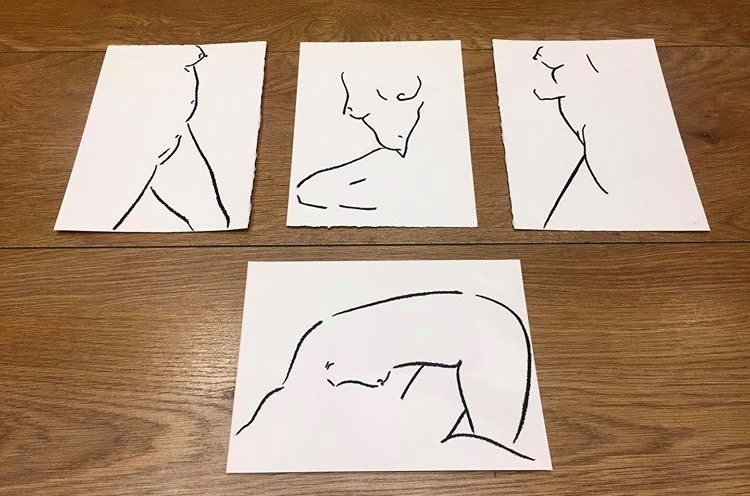
So how could each of these characters make us feel in adult life?
It may seem appealing to swing towards the avoidant stereotype -. if our partner needs no reassurance, our lives can stay as pretty much as they were, with some nice additions. But it will often feel like there’s something missing here. The best parts of a relationship allow for the feeling of greater self-acceptance that only happens after we expose a part of ourselves, one that we aren’t so sure about – and it is warmly received by another. And then, once we are significantly moved by someone, a sign that they need us is taken as a good thing. So, it’s more that we want to be needed by the right people and in the right ways. Our own disturbance at the wrong kind of neediness might be telling us something about ourselves and our own disowned difficulties.
An anxious type may use neediness as a kind of love test – needing reassurance at a party can be a way of making sure someone can bare us, that we are worth putting up with. If met with disregard, likely patterns will repeat. If we take the time to comfort, we might find that acts are not repeated – our support is assumed and therefore not doubted. If it’s uncertain, we are more likely to be routinely tested – possibly to breaking point. While the tester might lose out on companionship, they can at least take comfort in the fact that they were right in whatever they were testing (e.g. I was right I am unbearable, or, I was right they are insufficient).
So, if it’s not about independence, what is it about? If we are lucky enough to have built a healthy inner constitution as a single entity, then it is likely that a relationship will bring to the fore some insecurity, some undesired exposure.
With Winnicott’s rather hopeful theory of good enough mothering described above, we are able to trace a hopeful picture of relationship, one that allows for the difficulty of dependence.
We start as grown-up independent creatures, who meet with a fantasy of individual strength and hope. As we fall in love, we are reminded of our preferably forgotten troubles from childhood (falling in love can be exciting but also terrifying). If we are lucky, we have a good enough facilitating environment from our partner to help bear our insecurities, our neediness, as it trickles out in small doses, and at the right times. We have the courage to disclose the unsayable parts of ourselves and watch them fragment in the more reasonable and objective eyes of our partner.
We can look a little differently, then, on my friend’s desire for independence. As psychoanalyst and Winnicott disciple, Adam Phillips, says – “it’s about being as dependent on each other as possible – as we are all we’ve got”.
Maybe we can look more fondly on the hopelessness of our loved ones, expecting that the kinder we are, the quicker they are likely to return to balance. May we allow ourselves our own terror and lay our neurosis bear so that we can integrate more of the forgotten or wished away parts of ourselves, as the intolerable becomes laughable in the warmth of companionship.
For that sort of conversion, we really need each other.
For more on the ideas of D.W. Winnicott, the School of Life does a great 6-minute video which you can watch here and another that examines the idea of the true self which you can watch here. For more Smarticles on relationships, read more about the differences between chemistry and compatibility in relationships.
 Smarticles