Read Time: 5 mins
History does not repeat, but it does inform. This is the key takeaway of Timothy Snyder’s book “On Tyranny – 20 lessons from the 20th Century”.
Globalization was accelerating in the 1900s and its rise led to complexities that no one could have predicted. These changes were frightening and ever-present. Inventions such as the radio promised to pump this chaos directly into your front room. Globalization fundamentally changed the nature of trust, precipitating a shift in how we dealt with both strangers and institutions. This chaos presented an opportunity for new ideologies to take hold.
Fascism offered simplicity by relying on ancient myths of grandeur and glory. The way to revive this illusory golden era, they claimed, was via a united and glorious purpose, underpinned by the will of the people. The challenge was that relying on historical myths often leads to an acceptance of modern conspiracy. By trying to simplify the complexity of the new global world, the narratives that sought to make sense of reality instead became over-simplified then toxic and ultimately genocidal.
On the other hand, Communism was born from a band of elites and intellectuals who felt they had discovered the fundamental laws by which society should operate. They believed that by following those laws exactly, even in the face of common sense, the complexity of the world could be controlled. In reality, ignoring the randomness and complexity of life meant that their framework became first wasteful, then meaningless and finally deadly.
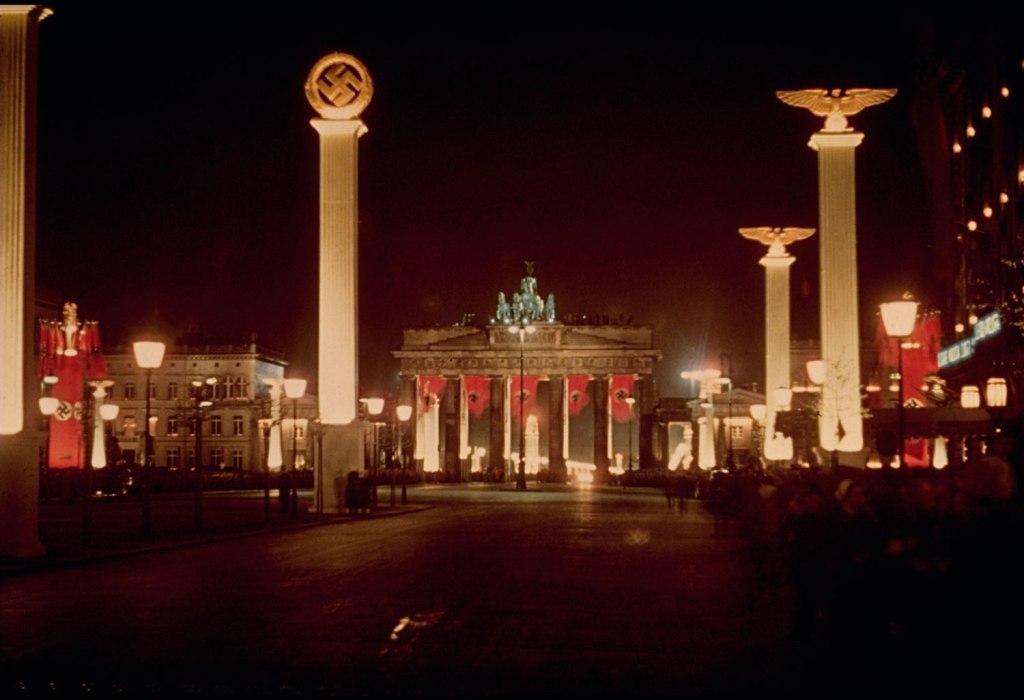
Synder warns us that modern society naively feels inoculated from the ravages of tyranny.
After all, there has been peace in (central) Europe for nearly 100 years. The progress in technology would leave the Russian Bolsheviks of the 1920s aghast. We live longer, we are more educated, absolute poverty has decreased, and literacy rates are higher than ever before. We learn about the rise of Nazism in school and every November 11th we remember those who fell in battle defending our freedom. How could it happen to us?
Well, the problem of complexity still remains. If anything, it’s accelerating. The indomitable march of technology has amplified it and made sure that complexity is now more pervasive than even the most powerful radio could have achieved. The advertising model, the 24-hour news cycle and unprecedented data collection have, both directly and indirectly, led to increasingly vicious attacks on democracy.

But there are things we can do.
Below is a summary of 5 lessons from Timothy Snyder’s book.
5 of 20 Lessons from the twentieth century
4) Take responsibility for the face of the world
Our ability to see and conceptualise patterns predates language by millennia. So it’s no surprise that a picture paints a thousand words, and less surprising still that symbols play such an integral role in promoting ideologies.
This lesson argues that we should care about the things we see. Throughout history, symbols have been promulgated by Power to marginalise. The yellow star was used to denote Jewish shops and eventually people in Nazi Germany. Posters depicting rich farmers as pigs were used in the Soviet Union. More recently, the characterisation of migrants as vermin in the United Kingdom.
To help protect against tyranny, the concept here is simple – if you wish to display a symbol, such as a lapel pin or a poster in your living room window, ensure that the symbol is inclusive rather than exclusive.
5) Remember professional ethics
There are many professions that are guided by a more substantial authority than the government of the day. Doctors take their Hippocratic oath, to first do no harm. Lawyers work to and within the letter of the law. Judges swear an oath to serve the people. Police officers perform an “attestation” to fairness, impartiality and fundamental human rights.
This lesson makes the case that there are many professions whose skills are needed to seed a new tyrannical system. The tyrant must first break down the institutions they wish to subvert in order to gain absolute power. This is very difficult if people view their professional ethics as their primary moral compass.
In Nazi Germany, if lawyers had observed habeas corpus (the right to a fair trial), if Doctors had observed their Hippocratic oath, if civil servants and bureaucrats had observed their commitments to human rights and refused to process documents that sanctioned murder, it would have been much more difficult for the state to operate with such a devastating legacy.
The advice is to act on our professional and personal ethics rather than those imposed by Power.
9) Be kind to language
Tyrants will do their best to hijack language. Otherwise banal or neutral events can be twisted to fit the narrative of emerging power. Often they will use phrases like “absolutely destroys” instead of “makes a good point”, or “fake news” instead of “different opinion” or “enemy of the people” instead of “leader of the opposition”. In each case, specific words narrow our ability to think critically about a given situation.
To compound this issue, there is an ever greater reliance on short-form visual stimuli (news segments or reels on social media for example). Tyrants will try to steal away the time we need to sit and reflect on concepts or events. It is in the interest of the tyrant to continually bombard you with new “breaking” or “trending” stories – so many that each new story displaces the previous story before you’ve had time to actually think about it.
In this lesson, the point is that by engaging on their terms and using the language they have prescribed, we inadvertently narrow our own perspective to that of the tyrant. We limit our own ability to discuss or even consider the wider picture. When we only consume information via short-form videos and reels, we don’t give ourselves time to understand what our point of view on a topic actually is. The result is an increasingly compliant and non-critical society; a perfect petri-dish for despotism.
The solution – use your own words whenever you describe a situation, instead of relying on words that have been put in your mouth by the grubby mitts of the media. Secondly, we can read more. Books, essays and long-form arguments (including long podcasts) give you time to interpret and quantify your opinions and help you see the big picture again.
19) Be a patriot
The word “patriot” is often used by tyrants. But it does not mean what they tell you it means. Patriotism is defined as a passion to serve one’s country and defend its laws and institutions.
This is critical. To be a patriot is to love and serve one’s country, its laws and its institutions. It is very difficult to form an argument where the exclusion, denigration or attacking of other people or countries fits the true definition of patriotism.
The thing that tyrants will often refer to as patriotism is in fact nationalism. That’s a different kettle of fish. Nationalism is exclusive. It promotes the self-interest of the state (and often the tyrant) at the expense of others. It is a belief that the state will benefit from acting independently rather than as part of a collective. In its worst form, it goes further, suggesting that the benefits of the state should only be enjoyed by a certain type of person (known as ethnonationalism).
In schools, children in the UK are taught about core British values. This includes democracy, the rule of law, individual liberty and tolerance for those of different faiths and beliefs.
When you contrast these values that children seem to be able to grasp to the rap sheet of the outgoing Prime Minister, the Right Honourable Boris Johnson, you can see that his actions are far from the definition of patriotism:
- Proroguing (suspending) parliament to dodge the democratic process (see more here)
- The only Prime Minister in history to have been caught breaking the law in office (see more here)
- Overseeing the obliteration of the right to protest (see more here)
- Use of racist slurs when referring to people with different faiths and beliefs (see examples here)
- Alleged collusion with ex-KGB agent Alexander Lebedev and then giving Lebedev’s son a Peerage in the house of Lords the year he was elected). (See Carole Cadwalladr’s report here)
Patriotism is important because, in its true form, it allows us to see the toxic roots of tyrannical and nationalistic thinking, and recognise that they pose a danger to one’s country. True patriots work to actively work to stop tyranny, not invoke it.
12) Make eye contact and small talk
This lesson is essential because it is the one that most of us can do every single day.
One of the things that happened during the purges in the Soviet Union and during the pogroms in Nazi Germany is that social interaction took on a sharp quality. The character of your interactions – people averting their gaze or ignoring you when you said hello – was a good indication of your status in the eyes of the tyrannical system. In short, it usually meant you were next.
Paranoia and suspicion fuel a tyrannical system, enabling secret police forces, collaborators and fear. This is because the relationship with the state begins to overwhelm the trust in the local community – your neighbours, your mechanic, bar staff, bus drivers and the owner of your local shop or market stall.
Simply by making eye contact and engaging in small talk, you strengthen the bonds of community. These relationships, however superficial, undermine tyrannical systems. This in turn is why they try desperately to destroy them with Us and Them narratives.
See it, say it, sorted – right?
Timothy Snyder’s book is a pocket-sized slap in the face that has a profound impact on anyone interested in preserving freedom and democracy in a world full of power structures that seem intent on destroying it. The 5 lessons above are cherry-picked. All 20 are fascinating and poignant. You can purchase On Tyranny and other works by Timothy Snyder here: https://www.timothysnyder.org/books
 Smarticles
2 thoughts on “5 Lessons to Help Save Democracy”